

Billionaire Life DLC
Playing Without a Company
You and your company are separate — survive a hostile takeover or bankruptcy, keep your fortune, and rebuild as an individual.
Normally in Capitalism Lab you are your company: lose it and the game is over. The Billionaire Life DLC changes that. You and your company are separate — your personal fortune is yours, not the company’s — so you can lose a company and keep playing as a wealthy individual, then found a brand-new company and climb back into the game.
The big idea: you, the person
Your personal wealth — personal cash, shares you hold in any company, bonds, bank deposits, your mansion, your art collection and luxury goods — belongs to you as a person, completely separate from any company you run. Because of that, losing your company no longer wipes you out:
- You keep every bit of that personal wealth.
- You keep playing as an individual, free to invest, trade, and live the billionaire lifestyle.
- When you’re ready, you found a new company and get back to building an empire.
The only thing you can’t do while company-less is win a company-based goal — for that you’ll need to found a new company first.
Keeping an eye on your money. While you have no company, the cash readout at the top of the screen switches to show your personal cash in place of a company balance — click it to open your personal finances. If you’ve turned on the Display Personal Cash option, that separate readout keeps working as before; your personal cash is never shown twice.
Where the settings live
When you start a new game, open the Billionaire Life DLC options and go to the Career tab.
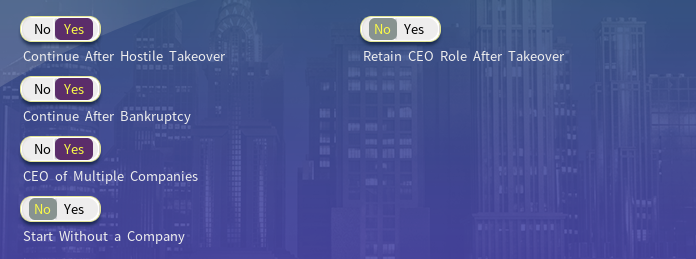
There you’ll find:
| Setting | Default | What it does |
|---|---|---|
| Continue After Hostile Takeover | Yes | A hostile takeover of your company no longer ends the game. |
| Retain CEO Role After Takeover | Yes | After a takeover, stay on as the company’s CEO under the new owner (for a salary) instead of being let go at once. |
| Continue After Bankruptcy | Yes | Going bankrupt no longer ends the game (your company is still liquidated). |
| CEO of Multiple Companies | No | Head several companies at once — see the Running Multiple Companies guide. |
| Start Without a Company | No | Begin the whole game as an individual, with no company at all. |
You can mix and match these freely.
Continue After Hostile Takeover
A hostile takeover happens when a rival buys more than 50% of your company’s shares on the Stock Exchange and seizes control of it.
With this setting off (the classic rule), that’s game over.
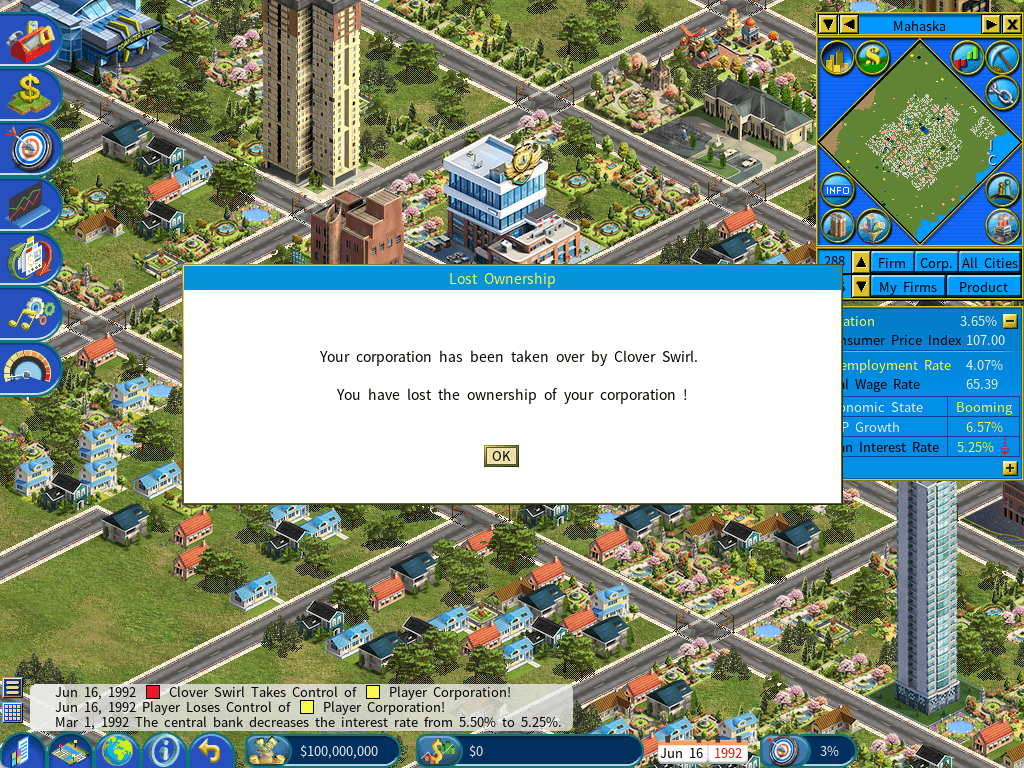
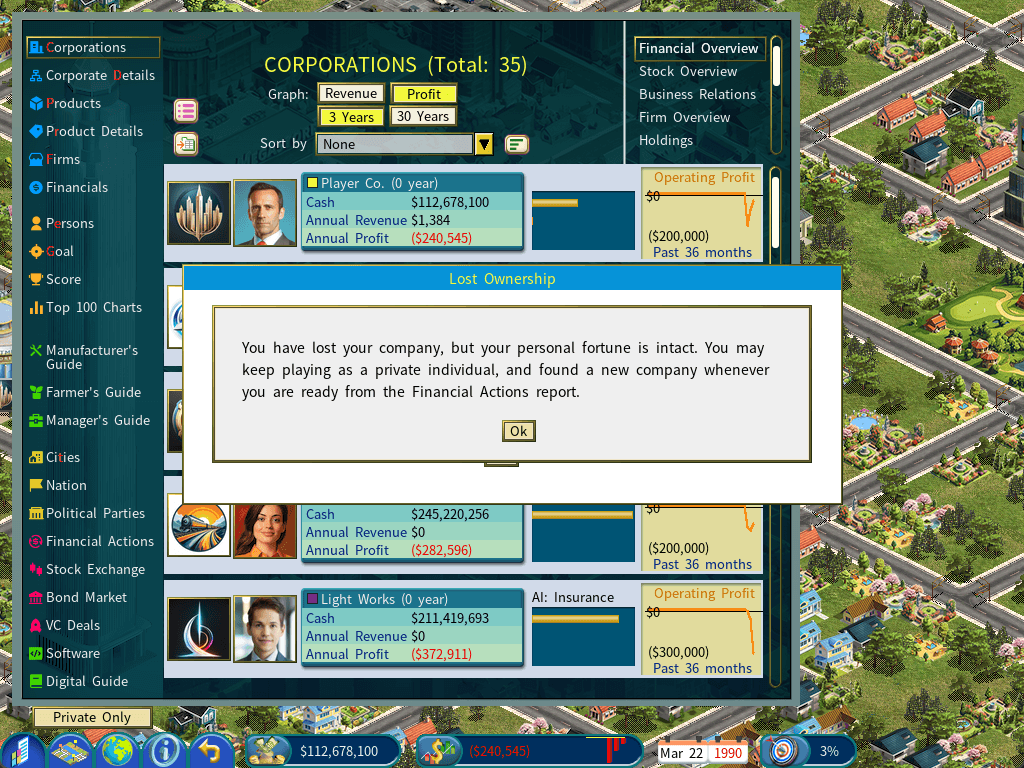
With it on, the takeover plays out but the game keeps going:
- The company you lost keeps running on its own as a computer-controlled company under its new owner.
- You keep all of your personal wealth and continue as an individual.
- You can found a new company whenever you like (see Setting Up a New Company below).
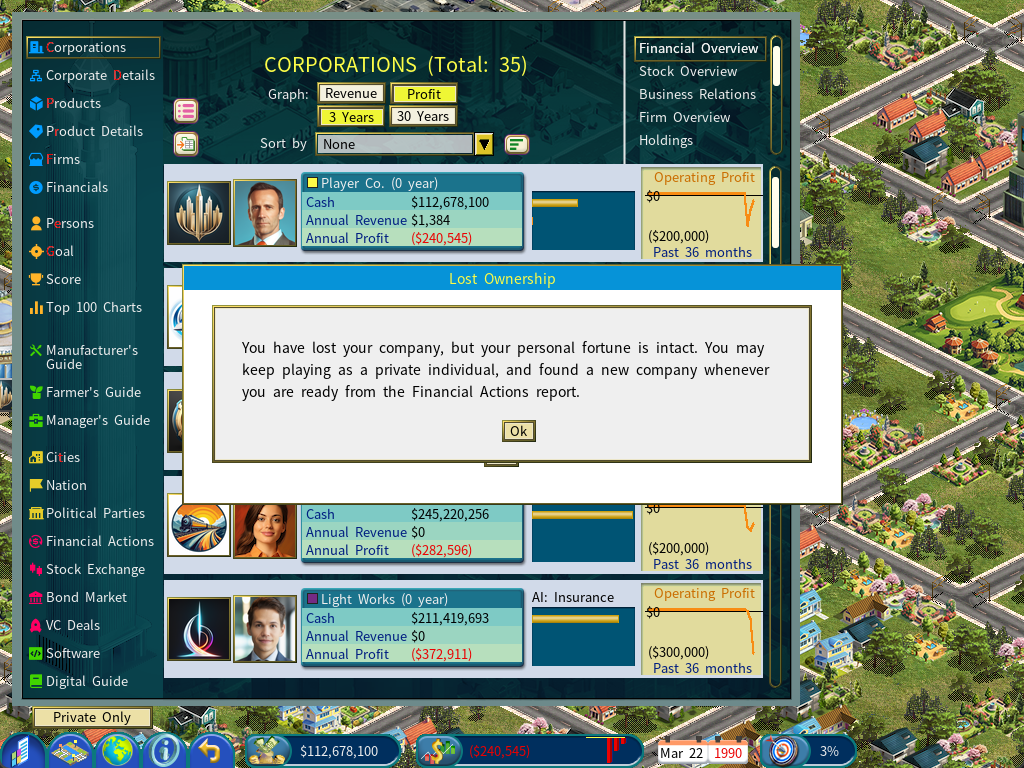
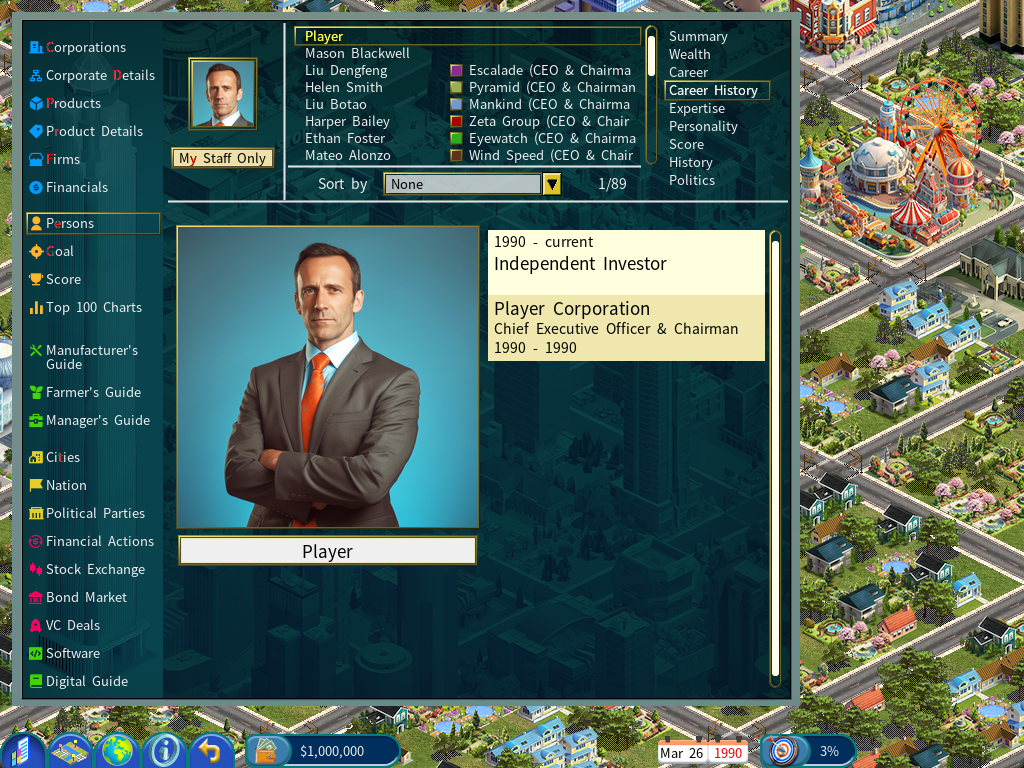
When the takeover completes, a message spells out what just happened — whether you’ve been left to carry on as a private individual, or (with Retain CEO on) kept on as the company’s CEO under its new owner — so the transition is never a silent surprise.
Staying on as CEO — and keeping the job
If Retain CEO Role After Takeover is on, you don’t walk away empty-handed after a takeover — you stay on as the company’s CEO, now working for its new owner. You draw a market-rate CEO salary (reviewed each year, just like any executive), and you keep running the company day-to-day.
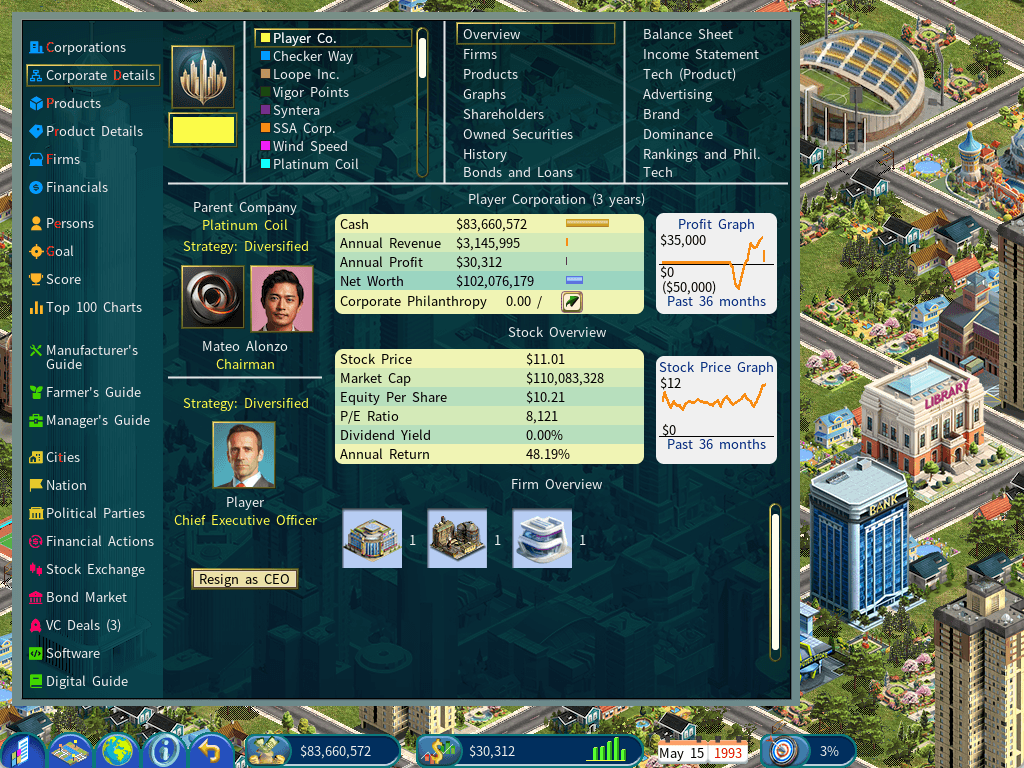
But you serve at the new owner’s pleasure. The new chairman (the rival who took you over) keeps an eye on your results:
- If the company performs well, or the chairman respects you, you keep the job indefinitely.
- If results turn poor and the chairman doesn’t like you, expect trouble.
Walking away: resigning as CEO
You are never trapped in the job. At any time — not only when the chairman has warned you — you can quit on your own terms.
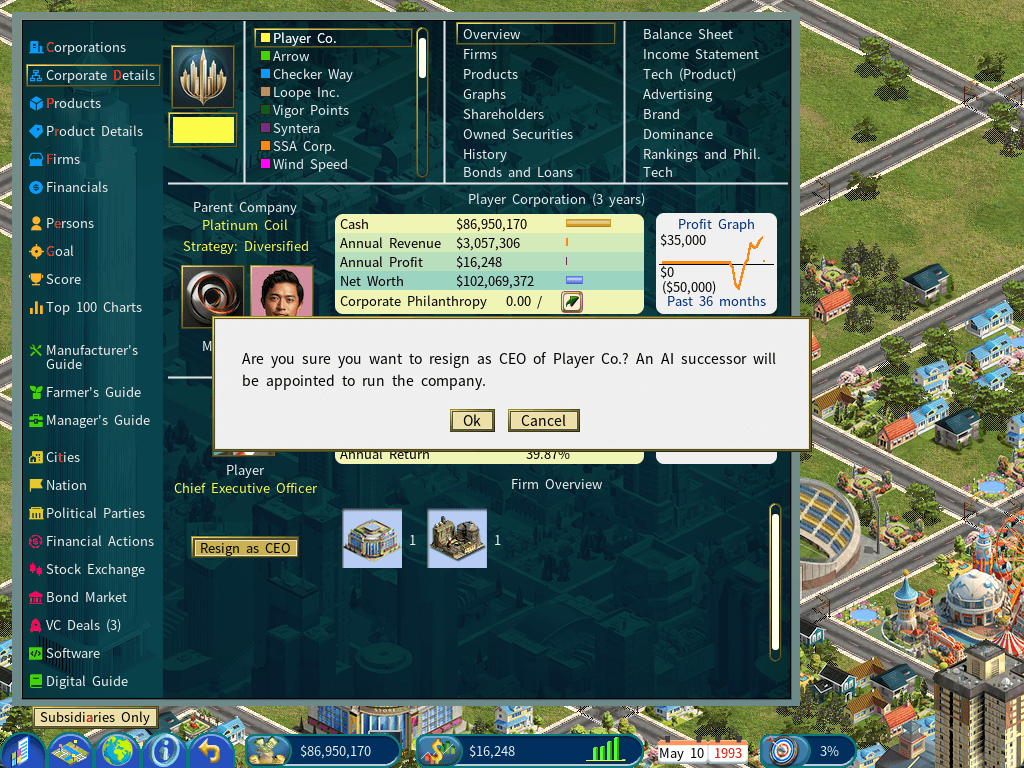
Where: open Corporate Details for the company you’re running and look at the Management panel on the left. Under the chairman and CEO entries you’ll find a [Resign as CEO] button. Click it and you’re asked to confirm — naming the company, so the seat is never given up by a stray click. Confirm, and:
- An AI successor is appointed in your place, so the company is never left leaderless.
- You stop drawing your CEO salary — you’re a private individual again.
- You keep every share you personally own in that company. Resigning gives up the job, not your investment.
Why quit voluntarily? Perhaps you’d rather put your energy into a new company of your own than run someone else’s. Perhaps you can see a firing coming and would sooner leave on your own terms. Or perhaps you simply want to sit on your fortune, buy shares, and wait for a better moment.
Resigning doesn’t rule out a comeback. Because you keep your shares, you can walk away from the CEO job and still buy your way back to control later — see Winning the company back below. Note, though, that one route back only works while you hold the CEO seat: if no shareholder has a majority, control passes to the sitting Chief Executive. Give up the seat and that particular door closes, so you’d need a genuine majority stake instead.
The chairman’s warning
Before firing you, the chairman gives you one clear warning — a message delivered to you personally. It reads roughly:
“I have been watching ⟨your company⟩’s results, and I am not satisfied. Profits are sliding and I have lost confidence in your leadership. Consider this a warning: turn the company around by my next review, or I will replace you as CEO.”
(A chairman who really dislikes you sends a blunter, final-warning version.) You have two choices on the warning:
| Button | Effect |
|---|---|
| I understand | Dismiss the warning and stay on. You now have until the chairman’s next review to improve the company’s results. |
| Resign | Quit the CEO job on your own terms right away, before you can be fired. You become a company-less individual (free to found a new company). You’re asked to confirm first, so the seat is never given up by a stray click. |
If, at the next review, results are still poor, the chairman fires you and installs a replacement CEO — you’ll see the usual “sacked as CEO” news. Either way (fired or resigned) you land back as a wealthy individual and can start over.
How long do you have? The chairman reviews you periodically — an aggressive owner reviews more often (and is quicker to fire), a cautious owner gives you a longer leash. You always get at least one full review cycle between the warning and any firing, so a genuine turnaround saves your job.
Winning the company back
Staying on as CEO isn’t necessarily the end of the story — the chairman’s grip depends entirely on the shares they hold, and shares change hands.
Control of a company only belongs to a shareholder while they hold more than 50% of it. If nobody does, control falls to the company’s Chief Executive — and that’s you. So if the rival who took you over sells their stake down below 50% — to raise cash, to fund another acquisition, or because their own finances are under strain — the chairmanship passes straight back to you.
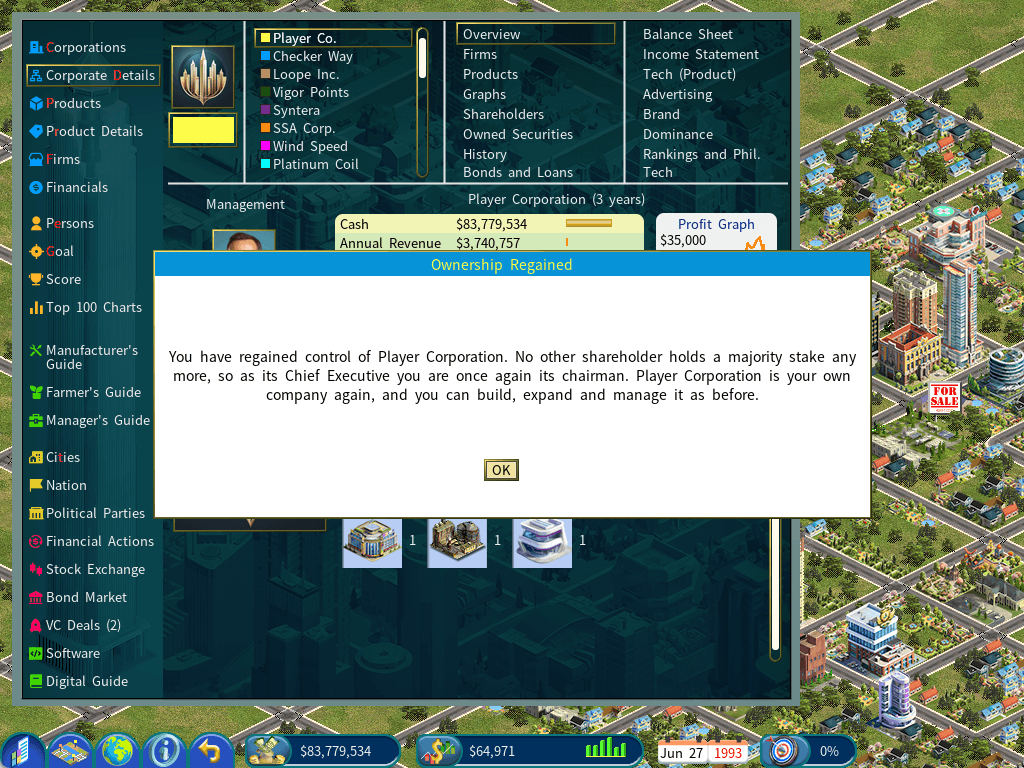
When that happens:
- You become the company’s chairman and CEO again.
- The company becomes your own company once more — you can build firms, expand, and manage it exactly as you did before the takeover.
- You stop drawing the salaried CEO pay you earned while working for the new owner — you’re an owner again, not an employee.
- A news story reports that you have taken control of the company, and a message window pops up to tell you directly.
The same thing happens if you buy your way back: keep accumulating shares out of your personal wealth while you’re working as CEO, and once no rival holds a majority against you, the company is yours again.
Worth watching the share register. While you’re the retained CEO, the Shareholders page of Corporate Details shows exactly how much of the company your new chairman still holds. If that number is drifting toward 50%, your old company may be about to fall back into your hands — and any shares you pick up yourself bring that day closer.
Continue After Bankruptcy
If your company runs out of money and goes bankrupt — whether you choose Declare Bankruptcy in the out-of-cash screen or the company is forced under — this setting keeps you in the game:
- The company is still liquidated to pay off its debts (there’s no avoiding that).
- But you keep your personal wealth and continue as an individual.
- As always, you can found a new company and try again.
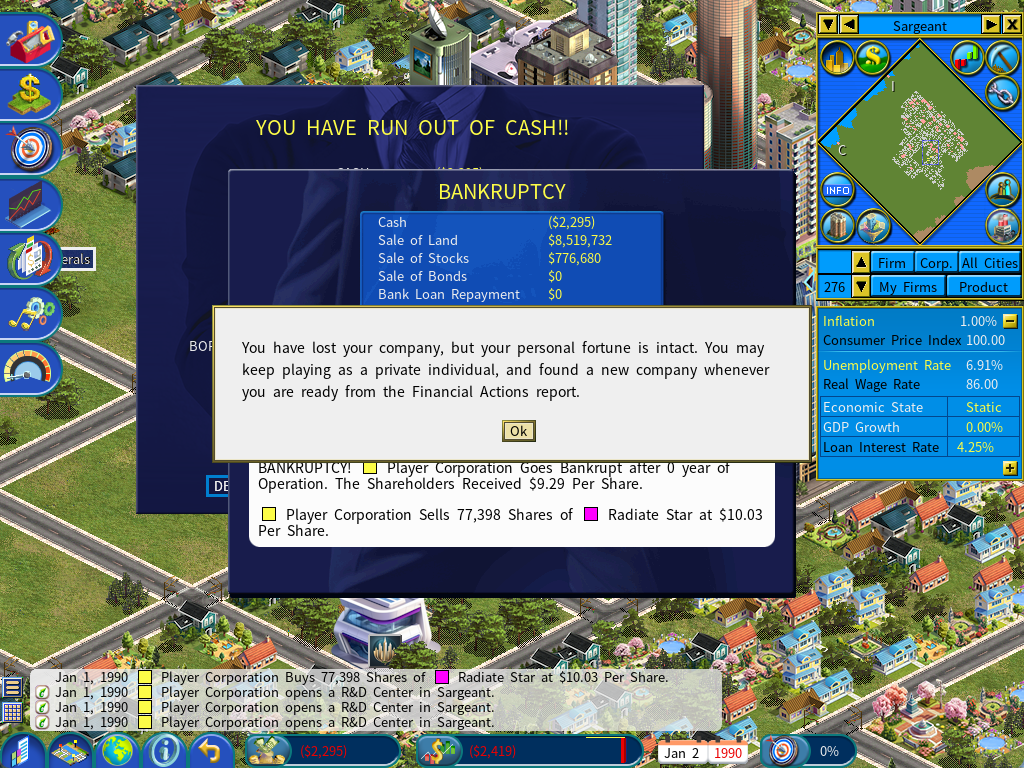
A message confirms that, although the company is gone, you can keep playing as an individual and found a new company from the Financial Actions report. With the setting off, bankruptcy ends the game as it traditionally does.
Start Without a Company
Want to begin as a self-made individual instead of inheriting a company on day one? Turn on Start Without a Company.
- You begin the game with no company — just your personal cash.
- Your starting personal cash is boosted to include the value of the stake you would otherwise have held in a starting company, so you have real money to work with.
- Spend the early game investing, trading shares, and building a war chest — then found your company when the timing is right.
Setting Up a New Company
Whenever you’re company-less — after a takeover, after bankruptcy, after resigning or being fired, or from the very start in Start Without a Company mode — this is how you get back in the game.
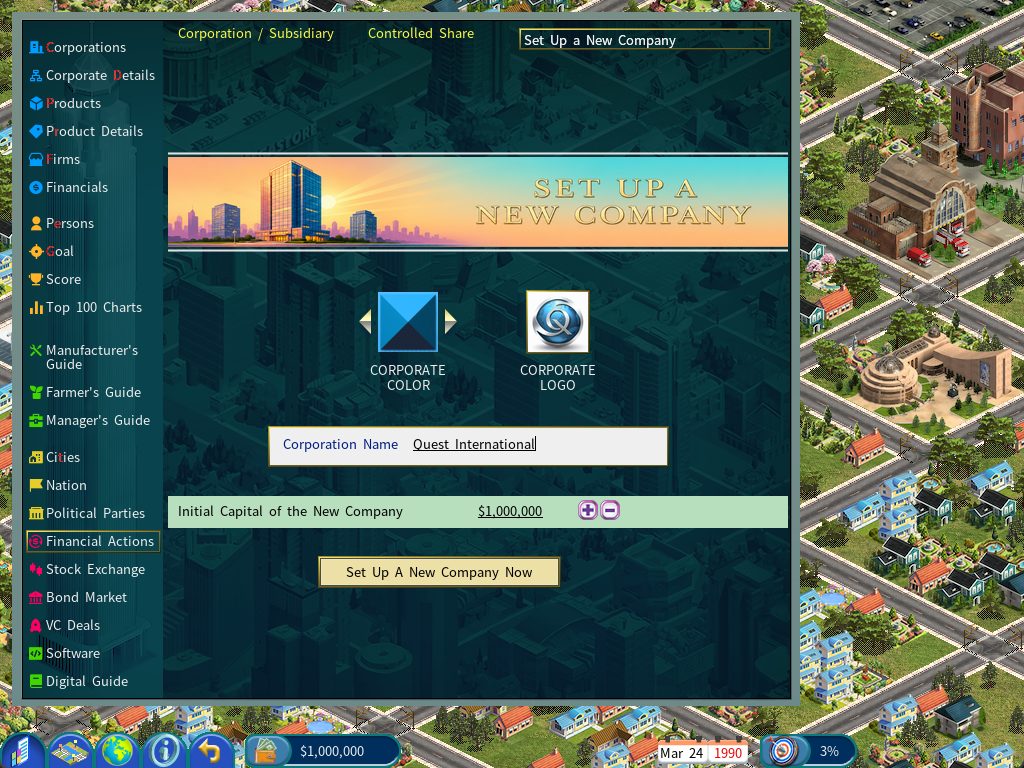
Where: open the Financial Actions report. When you have no company, its only entry is Set Up a New Company. Select it.
On the page, choose your new company’s:
- Corporate color and logo
- Name
- Initial capital — how much of your personal cash to invest
Then click Set Up A New Company Now.
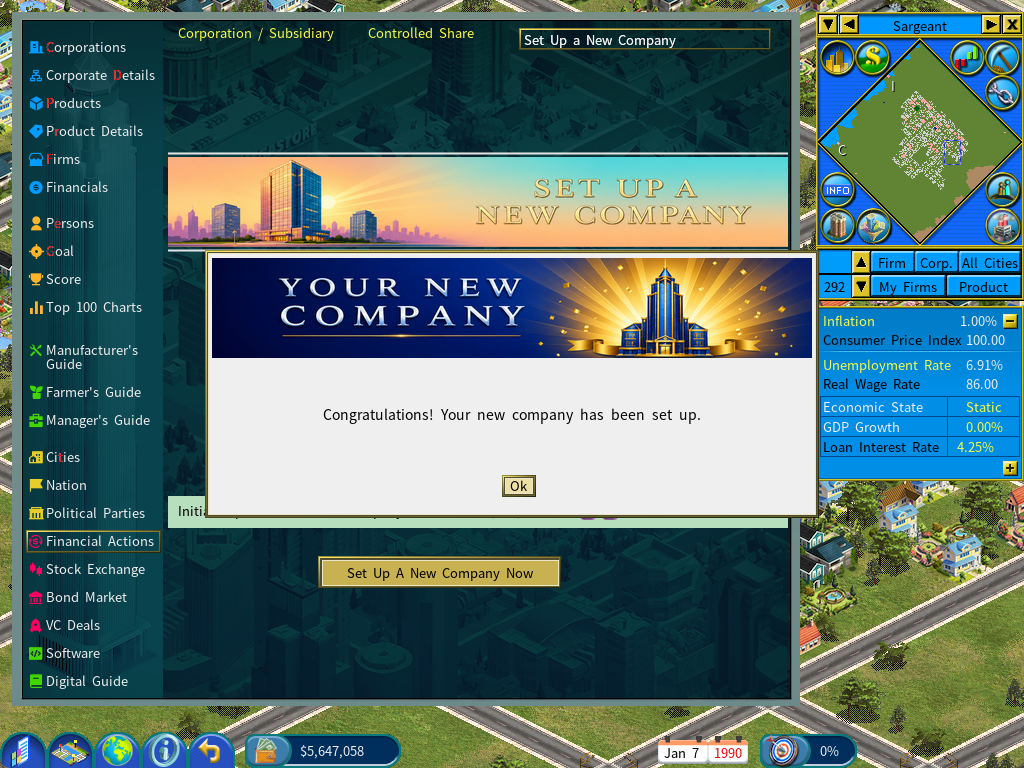
| Point | Detail |
|---|---|
| Minimum capital | If you don’t hold a controlling stake in any company, the minimum is just $1M (scaled by accumulated inflation) — deliberately cheap, so losing everything never locks you out of the game. If you do still control a company, founding another one requires the full $20M (also inflation-scaled), the same as setting up a subsidiary. |
| Funded by you | The capital comes straight out of your personal cash, so you can only afford what you can pay for. |
| You own 100% | A company you found this way is a private company that you own outright — no outside shareholders, no risk of a takeover until you take it public. |
| Go public later | Because it’s private, you can hold an IPO down the road to raise outside money (and, of course, take on takeover risk again). |
| When it’s available | Any time you have no company. It’s also available while you already own a company if you’ve enabled CEO of Multiple Companies. |
Once founded, you’re back to being chairman and CEO of your own company — the build toolbar and menu controls come straight back, so you can build it up and go again.
Putting it together — a comeback story
- A rival mounts a hostile takeover and seizes your company.
- Because Continue After Hostile Takeover + Retain CEO are on, you stay on as its CEO and keep your personal fortune.
- A rough couple of years follow; the new chairman warns you. You buckle down but can’t turn it around in time, and you’re fired.
- Now a company-less billionaire, you sit on your personal wealth, buy some shares, and wait.
- When you’re ready, Financial Actions → Set Up a New Company: you invest part of your fortune to found a fresh, privately-owned company — and start building your empire all over again.
Quick reference
| Feature | Where | Default |
|---|---|---|
| Continue After Hostile Takeover | New game → Billionaire Life DLC → Career | On |
| Retain CEO Role After Takeover | New game → Billionaire Life DLC → Career | On |
| Continue After Bankruptcy | New game → Billionaire Life DLC → Career | On |
| Start Without a Company | New game → Billionaire Life DLC → Career | Off |
| Set Up a New Company | In-game: Financial Actions report | — |
| CEO of Multiple Companies | New game → Billionaire Life DLC → Career | Off — see the Running Multiple Companies guide |
Remember: everything here is opt-in and needs the Billionaire Life DLC. Your personal wealth always survives losing a company — that’s what makes playing on as an individual possible.