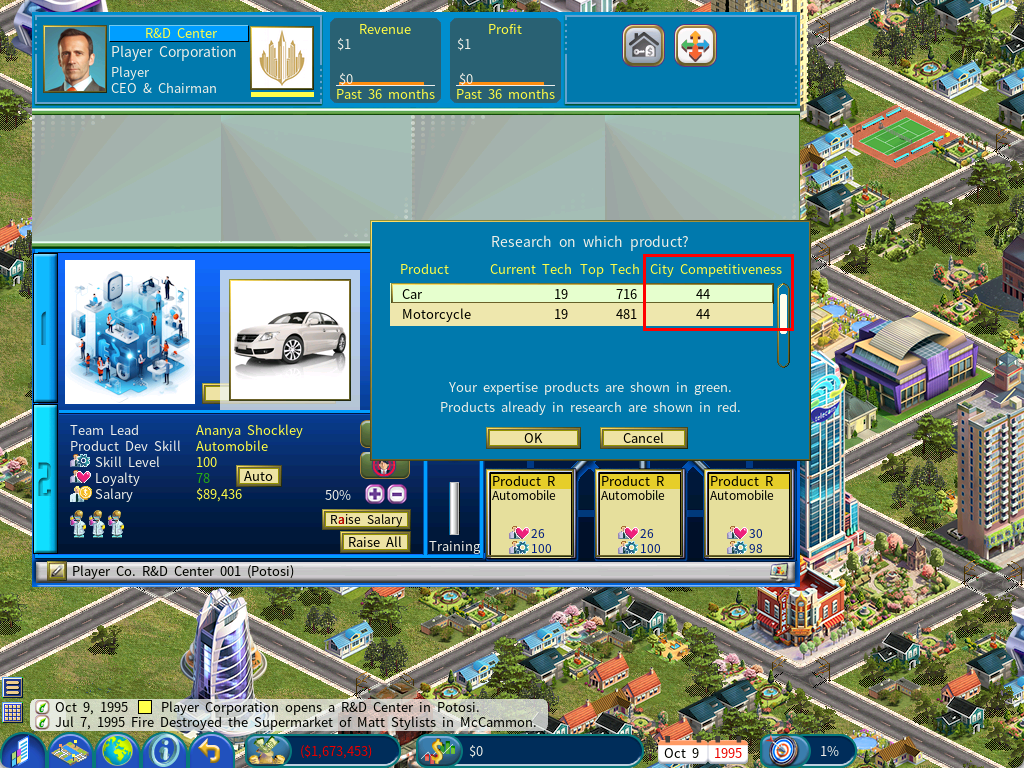

City Competitiveness Ratings
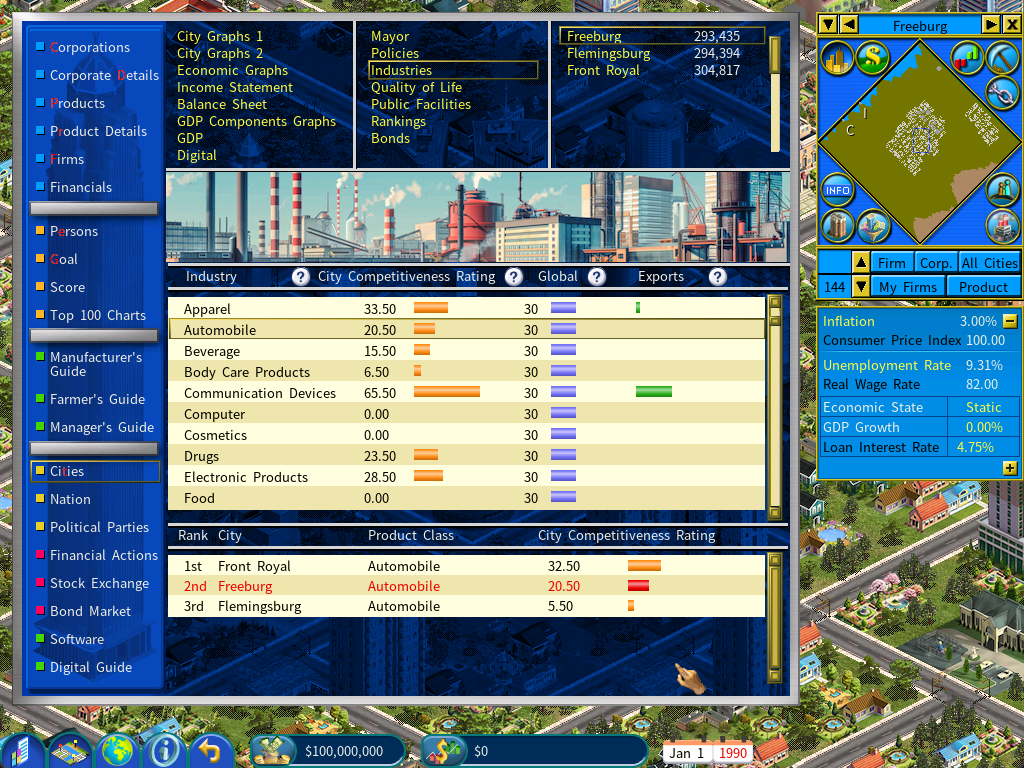
The City Competitiveness Rating measures how competitive a city’s industries are against those elsewhere. It is the key indicator of a city’s economic strength in the City Economic Simulation DLC.
Find it on the Industries page of the Cities report.
What the rating does
| Rating | Effect on the city |
|---|---|
| High | A larger workforce employed in that industry — more local production and a thriving sector. It also fuels exports, bringing in revenue and creating further jobs. |
| Low | A weaker industry, leaning on imported goods, which costs local manufacturing jobs. |
Three ways to raise a city’s competitiveness
1. More companies working in that industry, in that city
Competitiveness rises faster the more companies are engaged in R&D or production locally. Two kinds of unit count, and each is helped by a different level of education:
- R&D units — the share of citizens with university degrees affects the rate of increase.
- Manufacturing units and farm livestock processing units — the share with high school degrees affects the rate of increase.
2. Sponsored university research
The city government can fund a university to research a specific industry.
Learn More about University Research3. A landmark
Build a landmark and set its effect to increase competitiveness in a chosen industry.
Learn More about LandmarksWhy it matters for R&D
Competitiveness ratings feed directly into how effective research is at an R&D center specializing in that industry.
Site your R&D centers in cities that already rate highly in the relevant industry. The same research budget goes further there.