
Enhanced Product Simulation
Product categories in Capitalism Lab evolve over time: as newer products arrive, they progressively supersede the older ones. Demand does not simply grow — it moves, from the product consumers used to want to the product they want now.
How product categories evolve
Three examples show how this plays out.
Mobile phones give way to smartphones
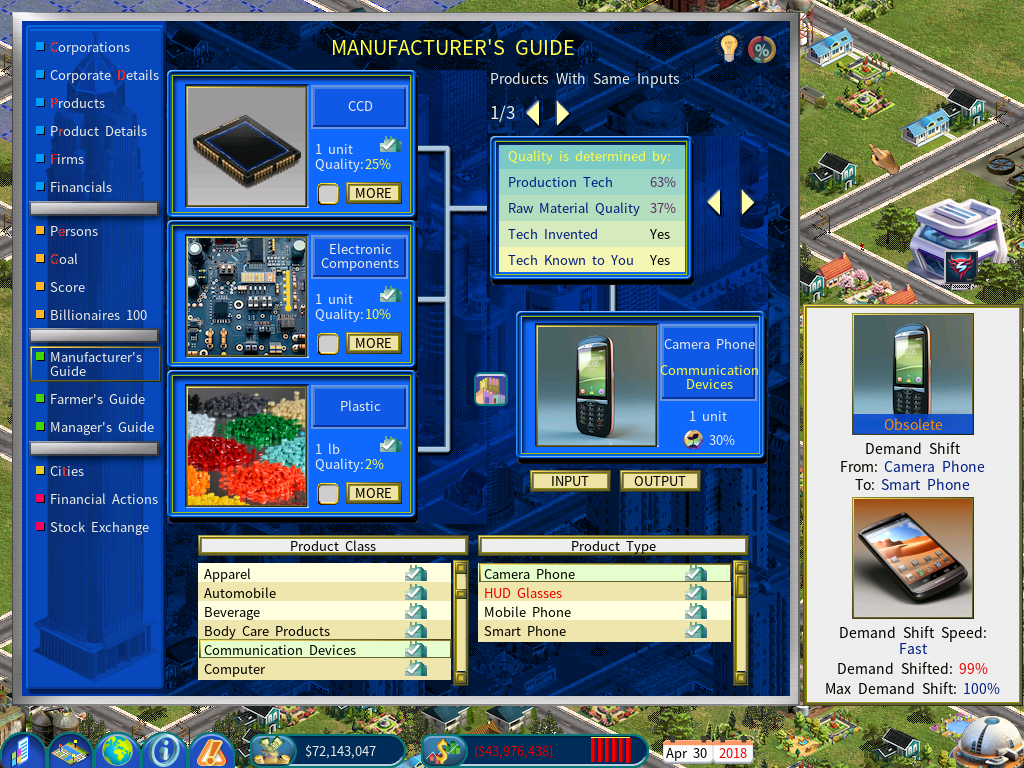
Traditional mobile phones are gradually superseded by camera phones. The transition becomes more interesting once smartphones arrive: most camera phone demand eventually shifts to smartphone demand, as consumer tastes move towards the more capable technology.
-

Mobile Phone -

Camera Phone -

Smartphone
Analog cameras give way to digital
As digital technology reshapes photography, the shift from analog cameras to digital cameras is inevitable.
-

Camera (analog camera) -

Digital Camera
Electric cars take share from gasoline cars
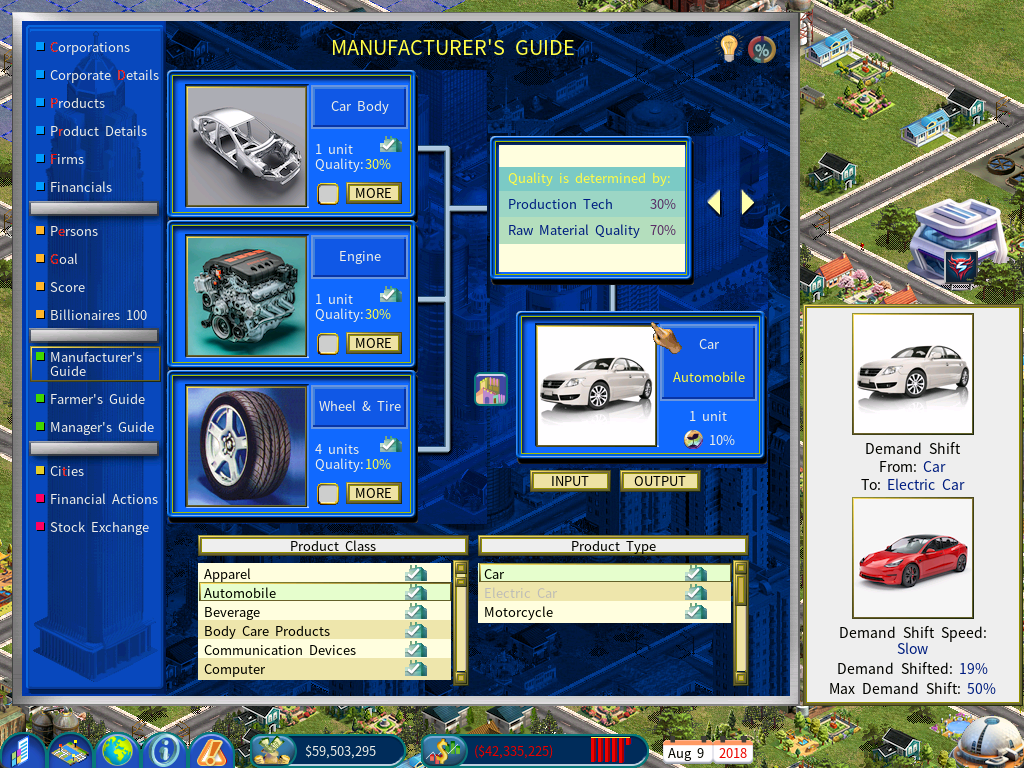
The arrival of electric cars has a profound effect on the private car market. The transition is gradual, but electric cars are projected to capture up to 50% of the market — a slow shift that brings both opportunities and challenges.
-

Car (gasoline cars) -

Electric Car
Understanding demand shifts in the Manufacturer Guide
The Manufacturer Guide shows how demand is moving to newer products — for example, that up to 50% of the demand for gasoline cars will shift to electric cars.
When a product nears the end of its lifecycle, the info window marks it clearly.
Once the demand shift passes 90%, the info window labels the product Obsolete.