

Purchases and Sales of Land Plots
Buying and selling land is one of the game’s key features. It lets you invest in real estate, develop properties, and profit from the investment itself — separately from whatever you build on it.
The land market is dynamic. Prices move with location, surrounding development and the state of the economy, so purchases and sales are worth thinking about rather than treating as a cost of doing business. Real estate speculation, planning future expansion and consolidating prime locations are all viable strategies.
How to purchase land plots
Open the land plot menu
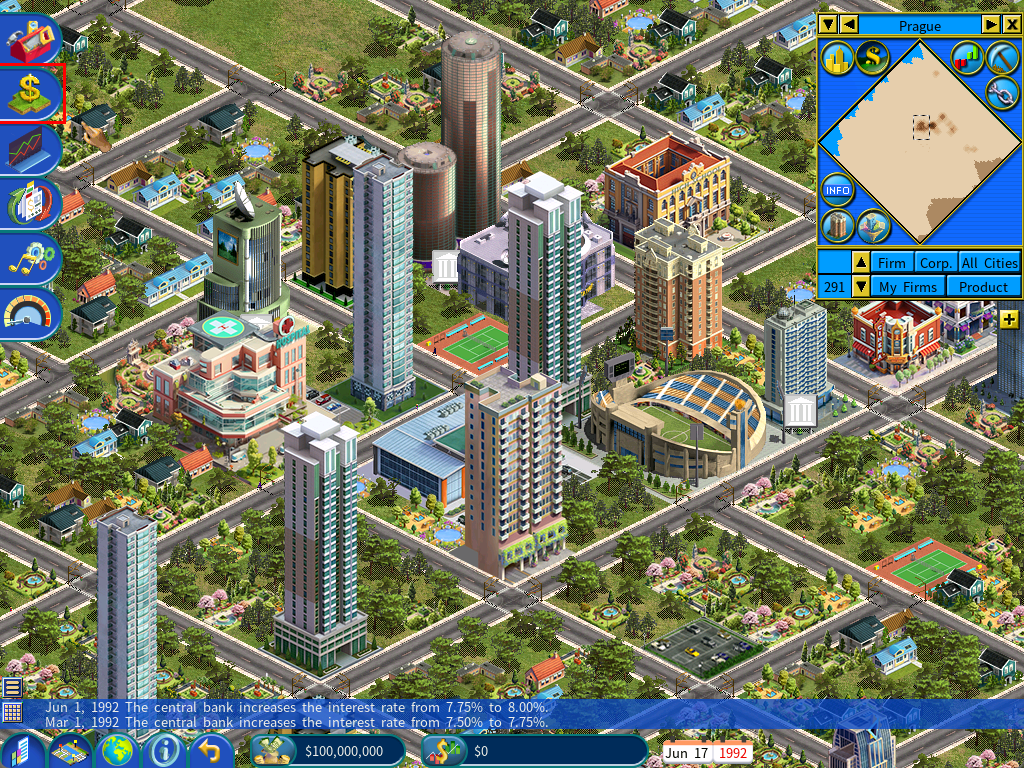
Click the Land Plot icon in the upper-left corner of the screen.
Choose size, then location
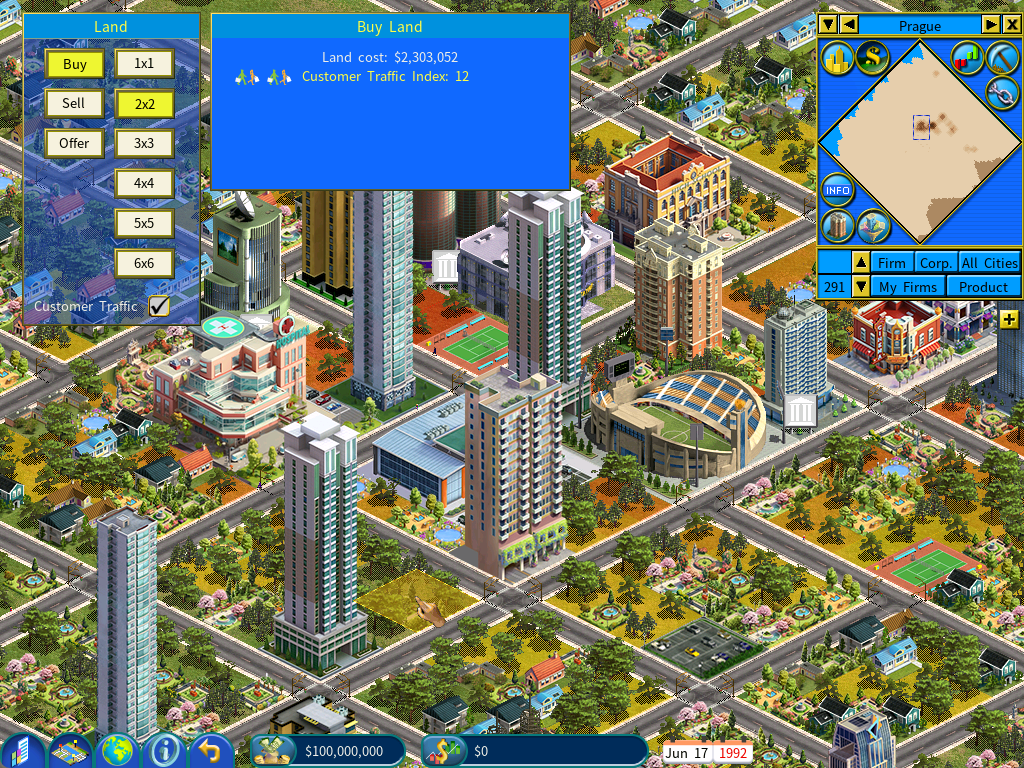
Select Buy, pick the size of plot, then choose where it goes.
What determines land value
| Factor | How it works |
|---|---|
| The city’s economy | The macroeconomic indicators below the mini-map. Inflation raises land values generally; a rising real wage rate raises them too; GDP growth and the overall economic state both feed in. |
| Natural resources | A location holding a reserve costs a great deal more to acquire. |
| Surrounding buildings | Density and type both matter — office buildings, apartments and retail stores lift land cost more than factories do. |

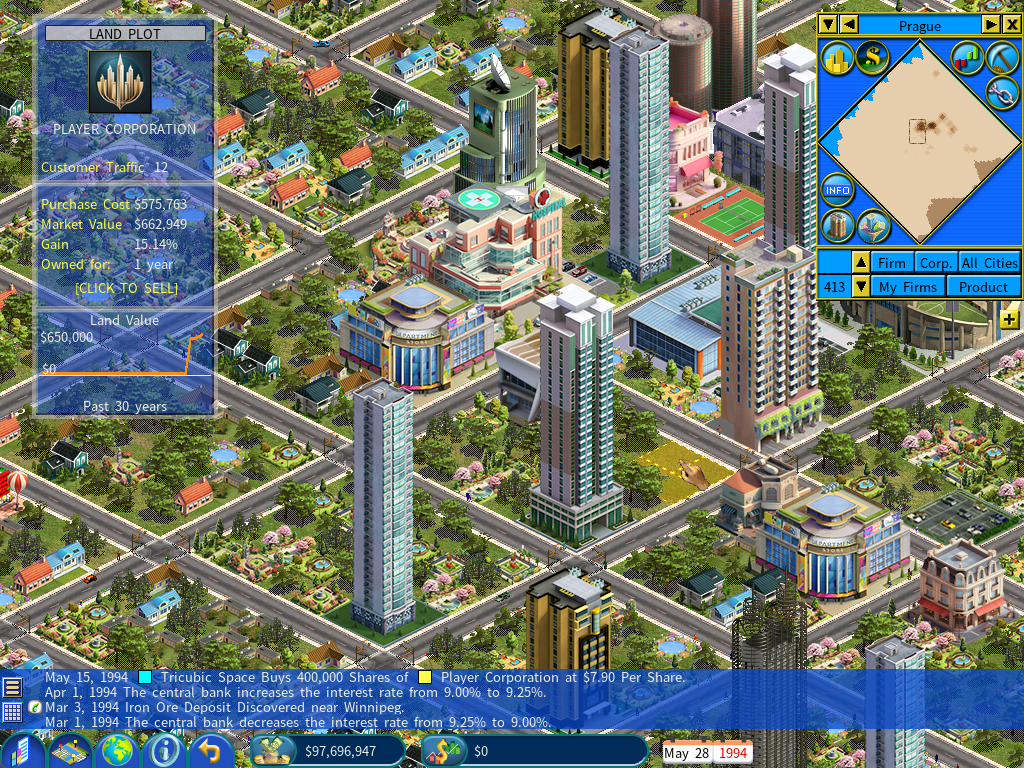
Hover the mouse over a plot you own to see its market value and the gain on your investment.
The downtown land strategy
Acquire downtown plots while they are cheap. Four forces then work in your favor:
- A growing city economy. As the city develops, demand for prime downtown locations rises.
- Limited supply. Downtown land is finite, which creates genuine scarcity.
- Price appreciation. Rising demand against fixed supply pushes prices up over time.
- Strategic position. Owning key plots lets you take advantage of future development — or sell at a premium to whoever needs them.
It takes patience, and it has a cost. Capital tied up in land is capital not running your business. The strategy works for players who can afford to play the long game — and for them it can be the cornerstone of an empire.
Also see
- The Evolution of Shanghai from 1990 to 2010 — a scenario where you acquire a large piece of land and develop a new residential area from the ground up.