
Inflation Simulation
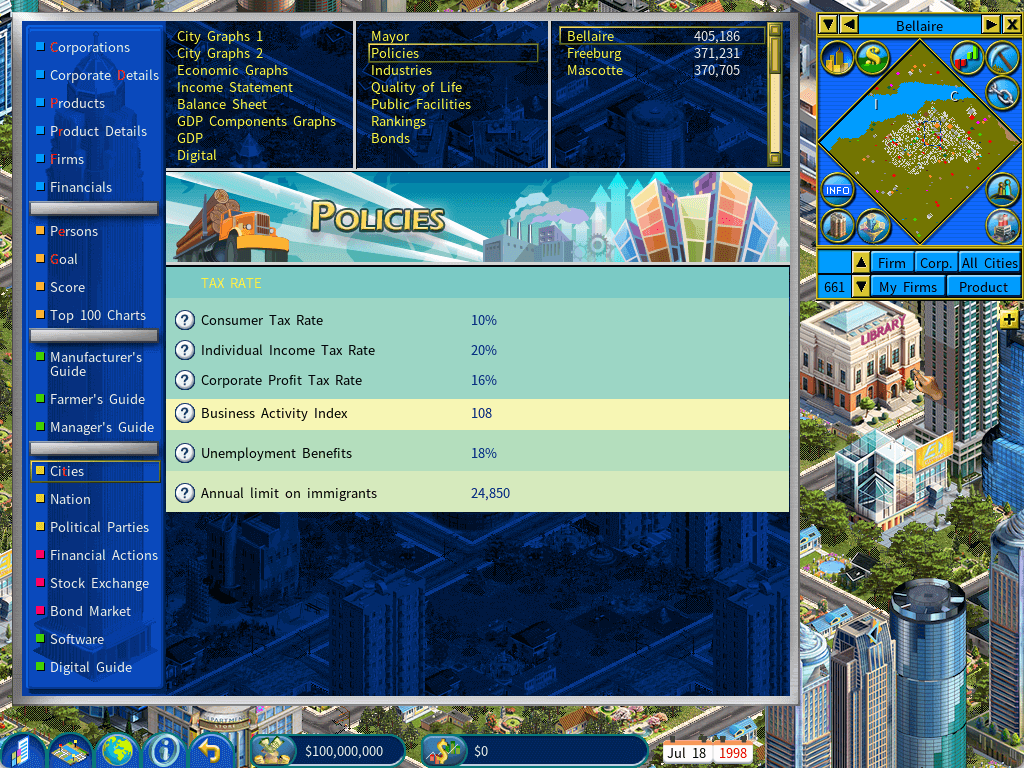
Start a game with inflation enabled and it reaches almost everything with a monetary value — product prices, land costs, building expenses, salaries, firm operating costs. It is a whole additional set of pressures to manage, and a set of opportunities alongside them.
Adjusting prices automatically
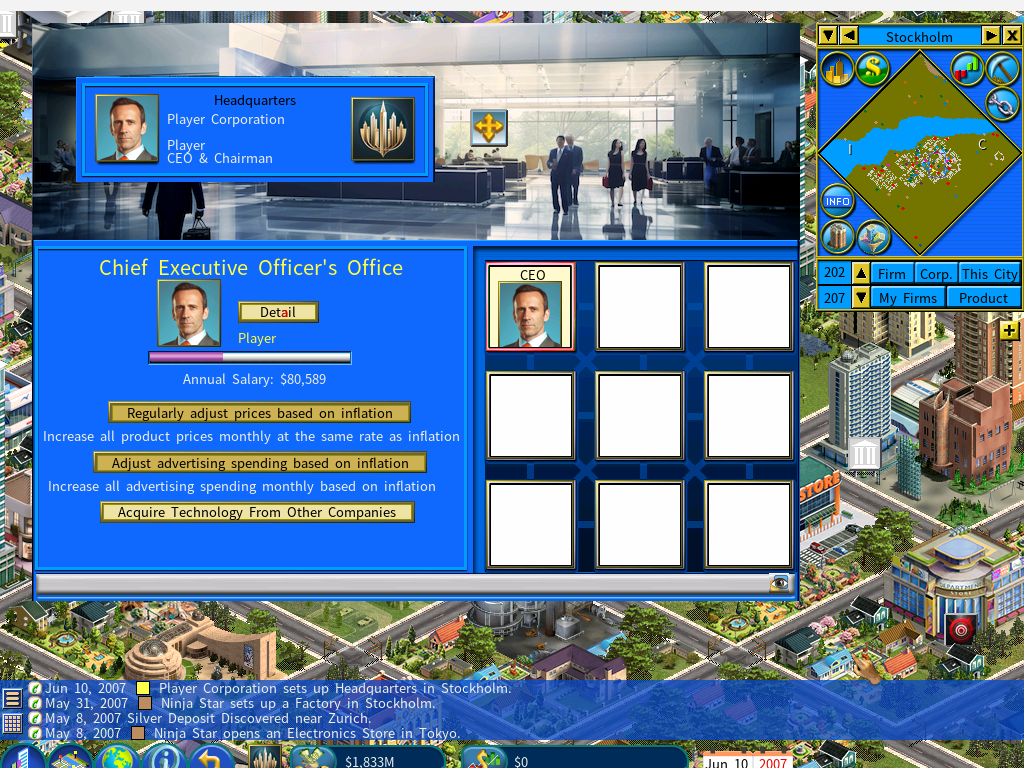
You can let the AI keep your selling prices and advertising spending in step with inflation. Set up a CEO office in your corporate headquarters and enable:
- Regularly adjust prices based on inflation
- Adjust advertising spending based on inflation
Inverse Inflation mode
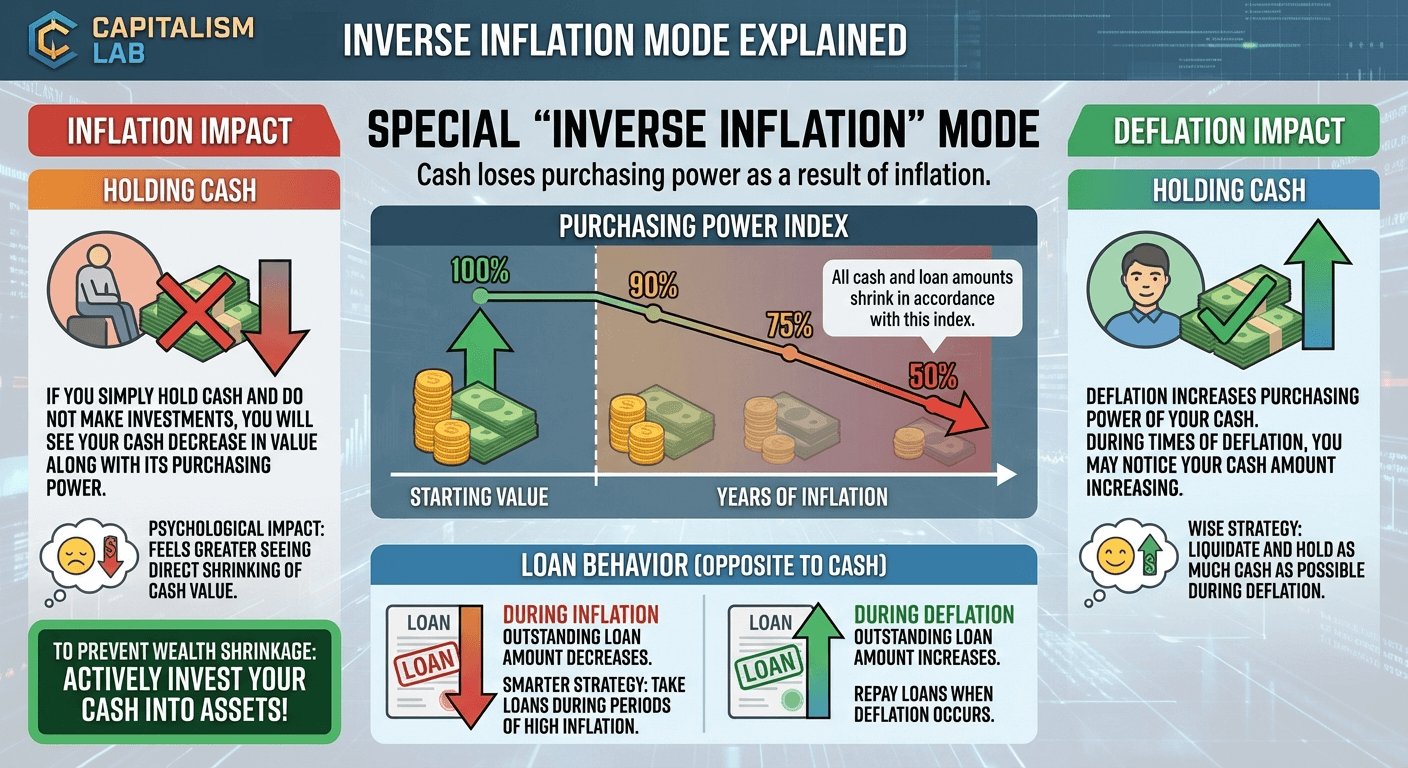
In Inverse Inflation, cash visibly loses purchasing power. A Purchasing Power Index starts at 100% and falls through years of inflation, and all cash and loan amounts shrink with it.
Hold cash without investing and you watch its value decline. To keep your wealth from shrinking you have to put it into assets.
Cash always loses purchasing power to inflation, whether the mode is normal or inverse. What changes is that you see it happen — and the psychological weight of watching the number fall is considerably greater.
| Condition | What happens to cash | What happens to loans | The play |
|---|---|---|---|
| Inflation | Shrinks | Outstanding balance shrinks | Borrow, and hold assets rather than cash. |
| Deflation | Grows | Outstanding balance grows | Liquidate, hold cash, and repay debt. |
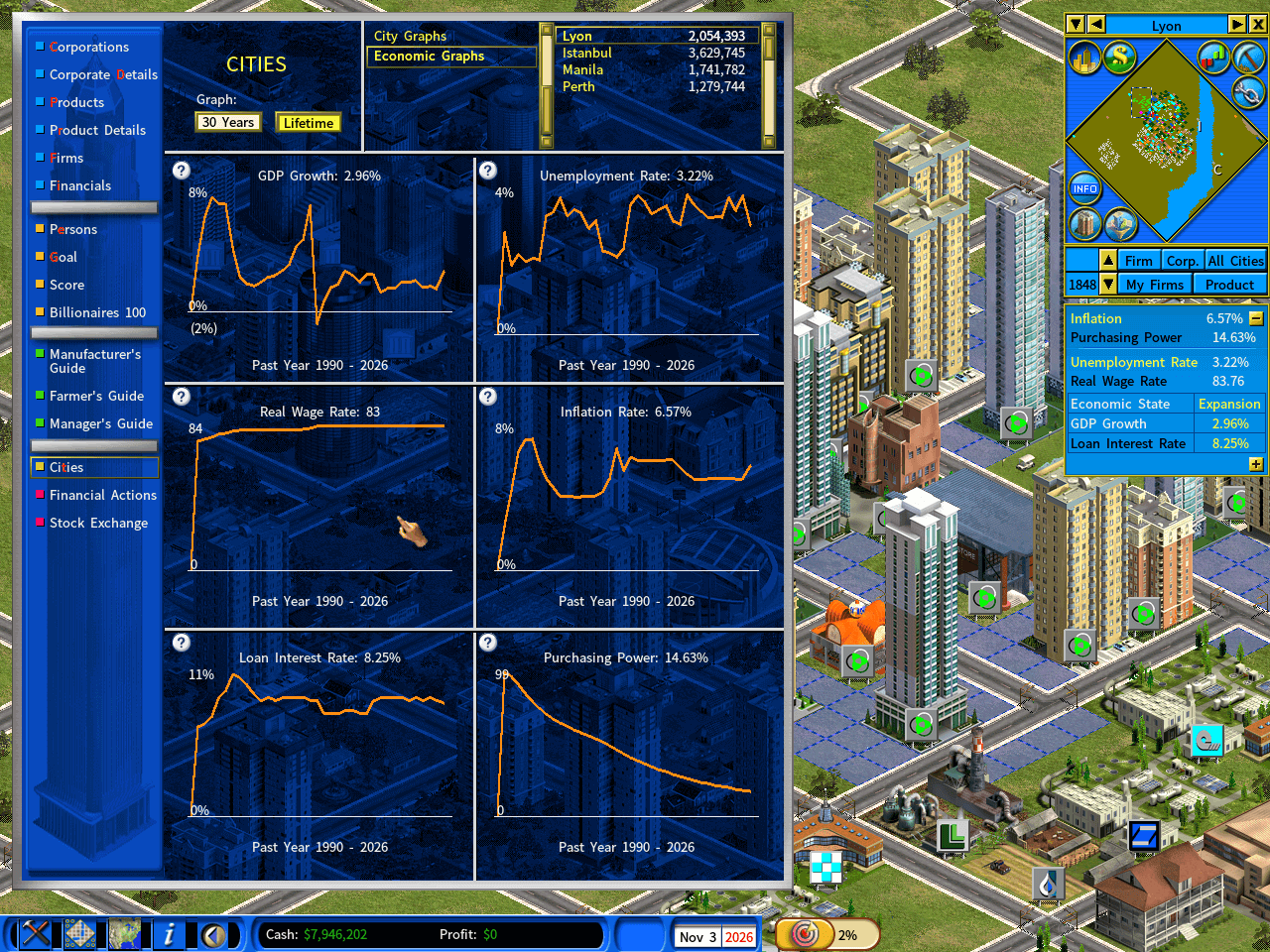
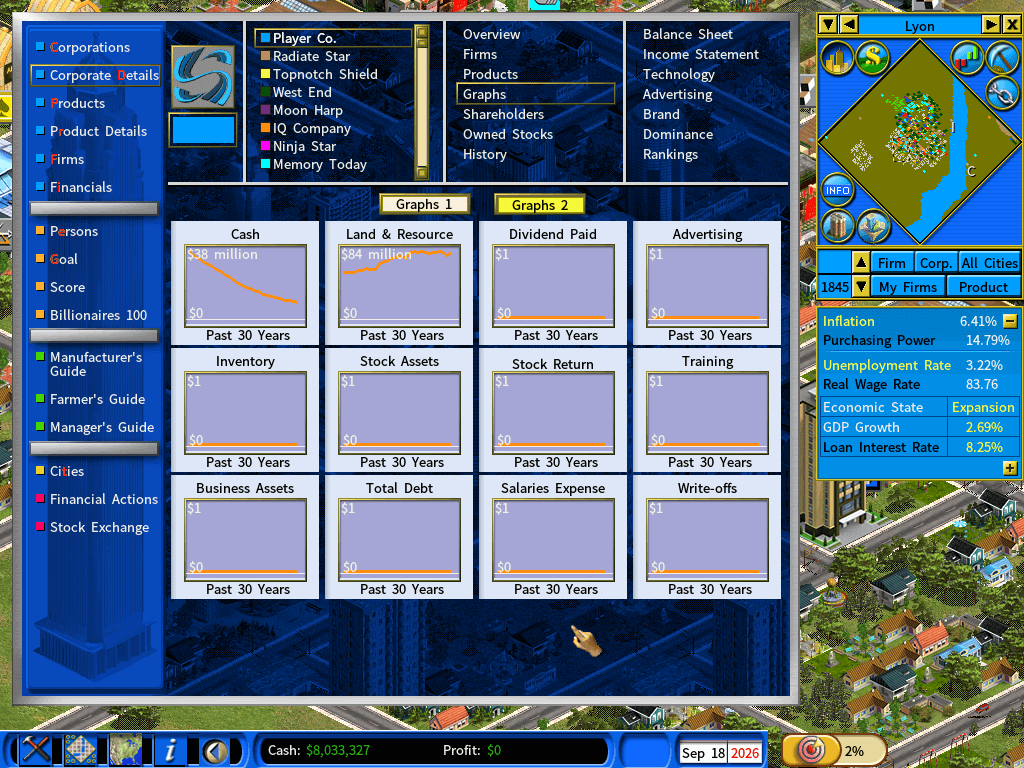
Take no action at all and your cash still declines — while the values of your land and resource assets are unaffected by inflation.
Turning it on
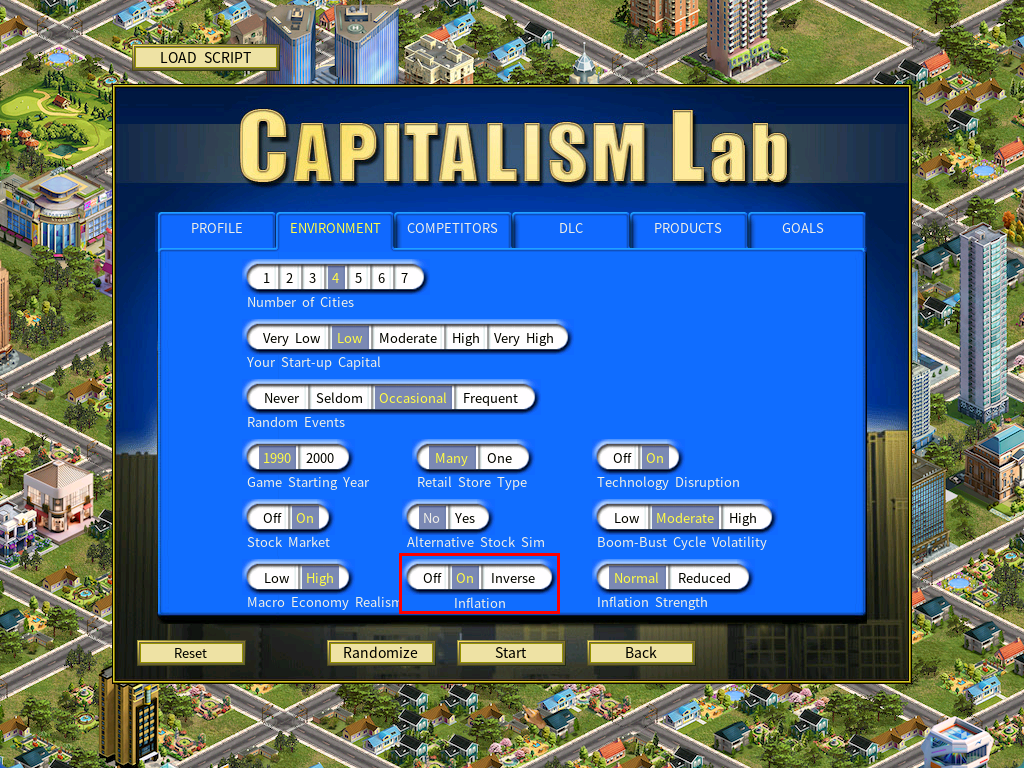
Open the Environment page of the New Game Settings menu and set Inflation to Inverse.
Currency revaluation in hyperinflation
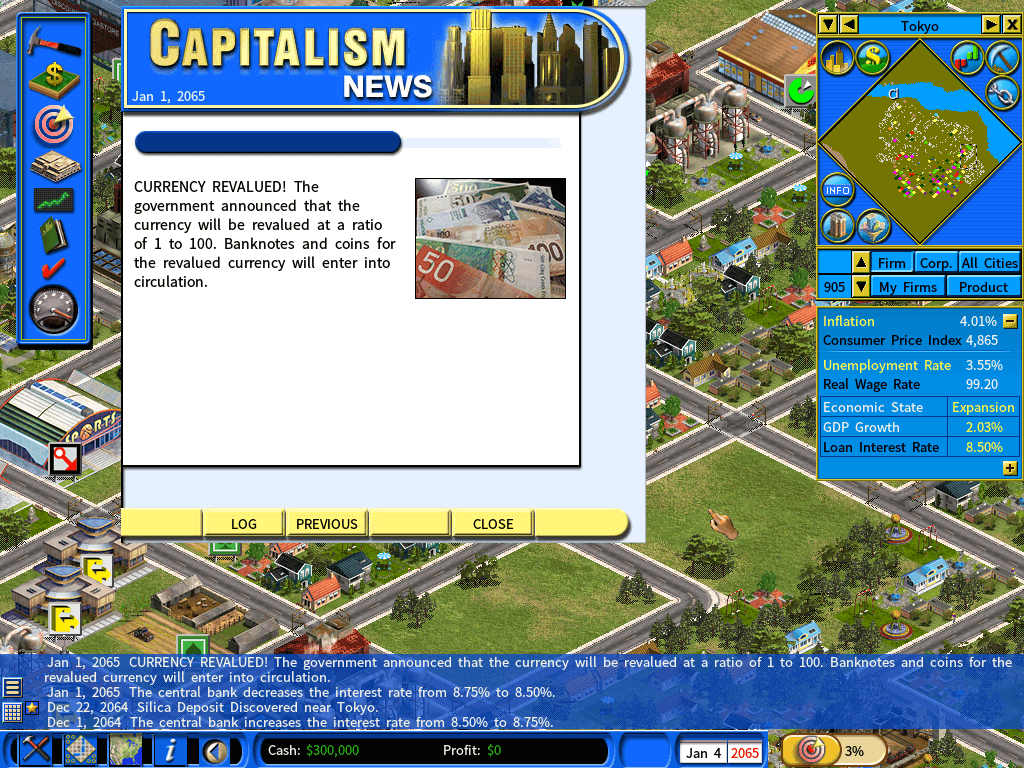
When inflation reaches 100 times — 10,000% — the banks issue new banknotes worth 1% of the current currency. It cuts the nominal value of everything in circulation, which keeps the figures on screen manageable.
What drives inflation
Monetary policy
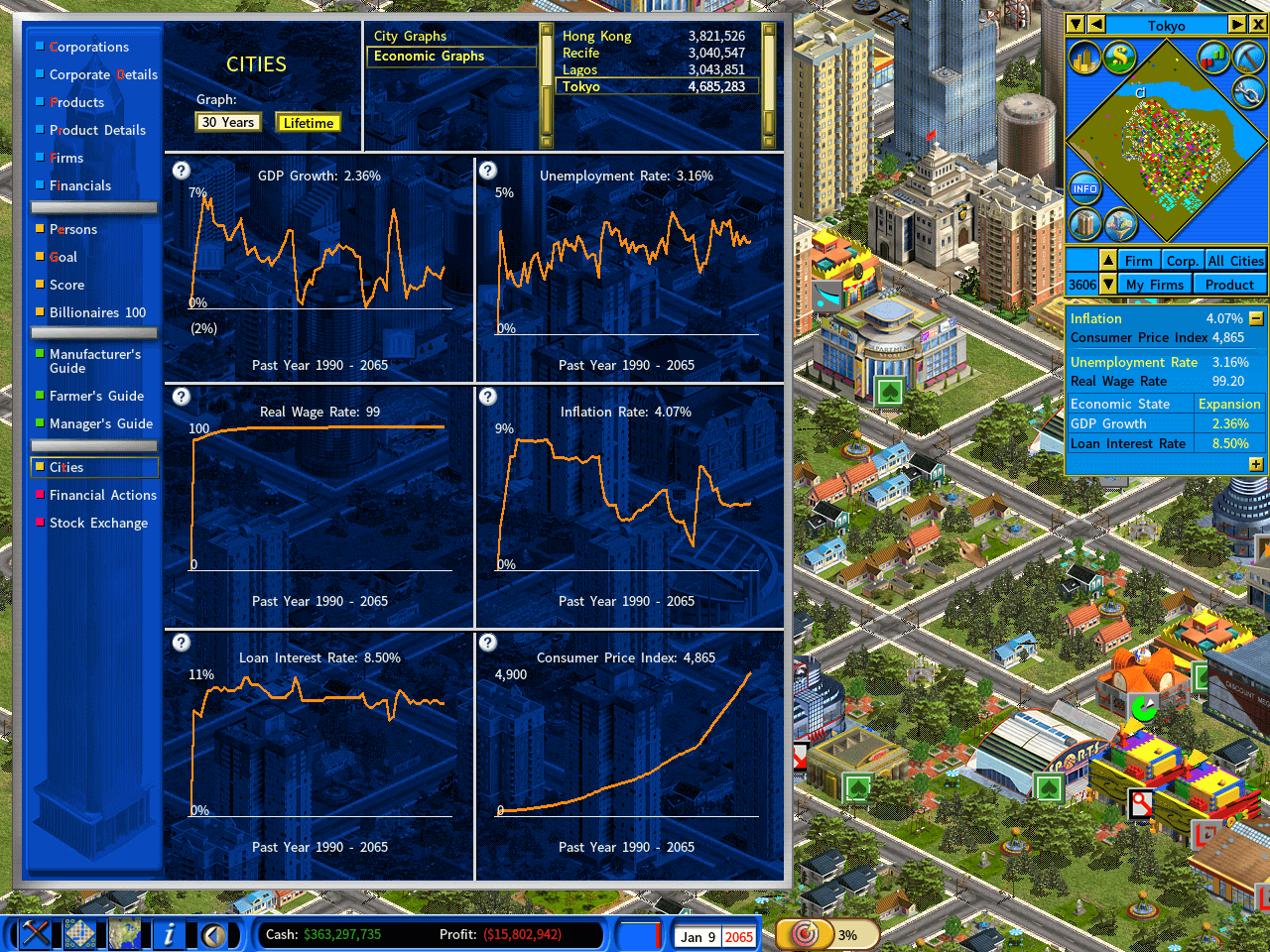
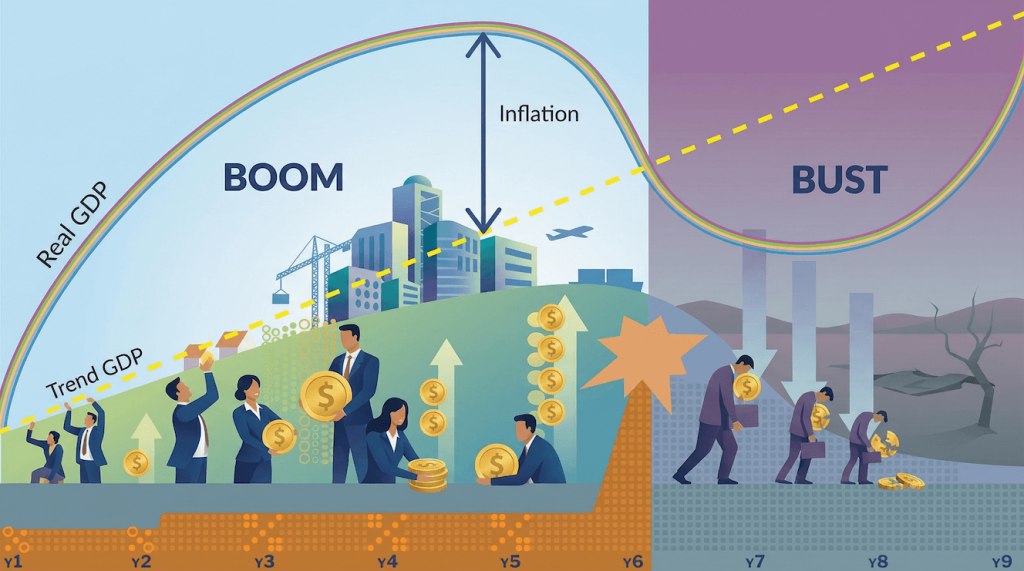
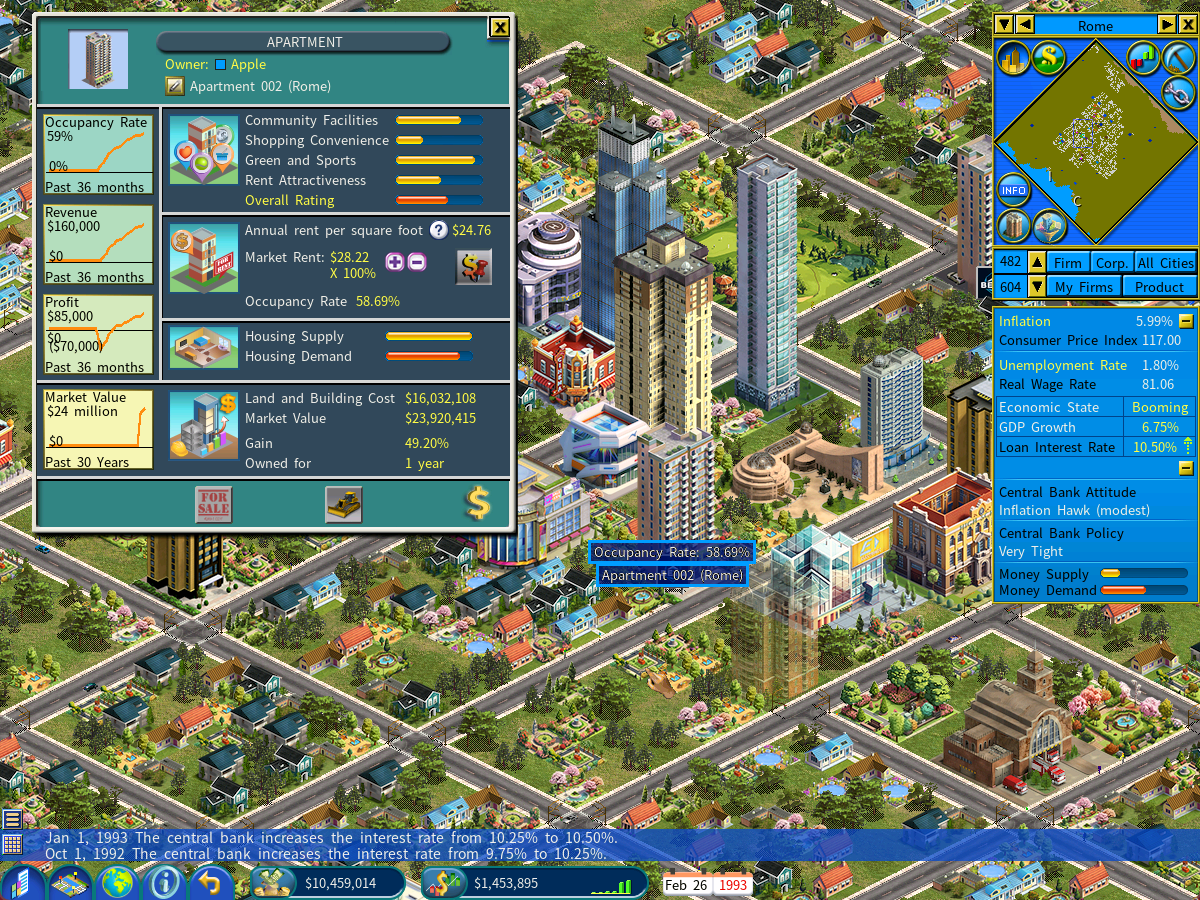
The central bank moves interest rates in response to inflation. Loose policy — ample money supply, low rates — fuels inflation by encouraging spending and investment. High inflation then prompts rate rises to cool the economy, which can tip it into recession. See Enhanced Macroeconomic Simulation.
Economic indicators
- GDP growth raises consumer and investor confidence, and the spending that follows drives inflation. See How to Increase GDP Growth.
- Low unemployment raises consumer spending power, feeding demand-driven inflation.
Economic cycles
Inflation typically rises through an expansion. When it goes too far the central bank raises rates — and the recession that may follow is how prices get stabilized.
Opportunities and risks
| Aspect | Opportunity | Risk |
|---|---|---|
| Asset management | Invest in real estate and other assets that appreciate with inflation — rents rise with it. See Real Estate Simulation. | Holding cash through inflation loses purchasing power, visibly so in inverse mode. |
| Borrowing | Borrow during high inflation: the real value of the debt falls over time, and you repay in deflation when cash is worth more. | The rate rises used to control inflation raise borrowing costs. |
| Pricing | Automatic adjustment from the CEO office keeps you competitive without micromanagement. | Failing to adjust means selling below market value, straight off your margin. |
| Economic cycles | Expand into a boom. | A recession triggered by aggressive rate rises cuts consumer demand. |
| Deflation | Cash gains purchasing power — the time to hold it. | Assets are the wrong place to be, and outstanding loans grow. |
How you influence inflation
Indirectly, through business decisions
Large-scale investment — new factories, new retail outlets — raises economic activity. That lifts the investment component of GDP, creates jobs, lowers unemployment, raises wages and increases consumer spending. Inflation follows.
Directly, as mayor
The City Economic Simulation DLC puts fiscal policy in your hands:
- Government spending. Building police stations, community facilities and the rest is expenditure that stimulates the economy — and can contribute to inflation.
- Taxation. Adjusting tax rates balances growth against public services, and shapes consumer spending.
Monetary policy is never yours. Interest rates and money supply stay with the central bank, which responds to inflation and the other indicators on its own.