

The Rise of Electric Cars
The electric car is a product type that reshapes the automotive industry — a new production chain, a new natural resource, and a market that shifts under you over decades rather than years.
Invention and timeline
It can only be invented after 2005, following the real-world timeline. The invention itself takes several years, so it is a decision you commit to well before it pays.
The production chain
An electric car needs two inputs, and one of them has a chain of its own beneath it.
| Product | Made from |
|---|---|
| Electric Car | Electric Car Chassis + Car Body |
| Electric Car Chassis | Wheel and Tire + Electric Motor + Electric Car Battery |
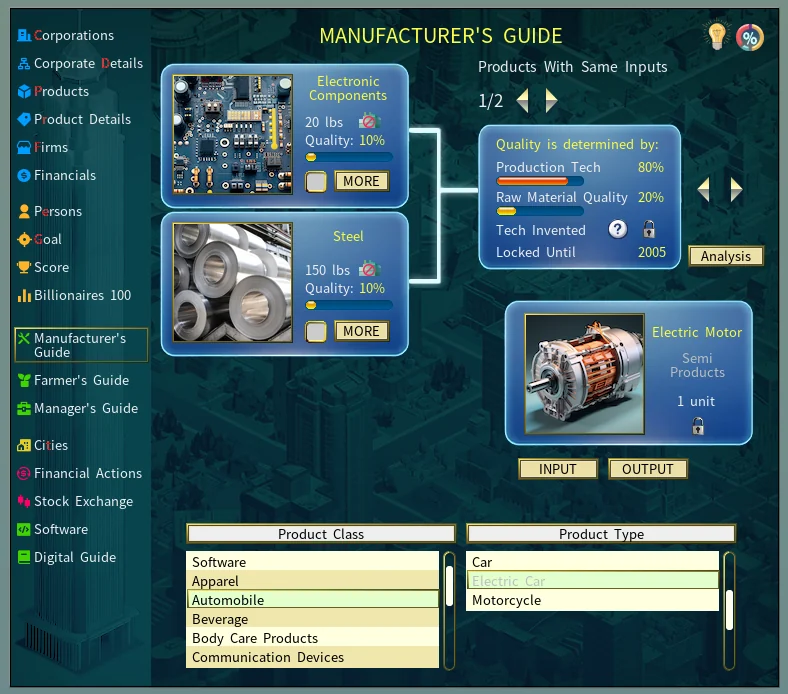
| Electric Motor | Steel + Electronic Components |
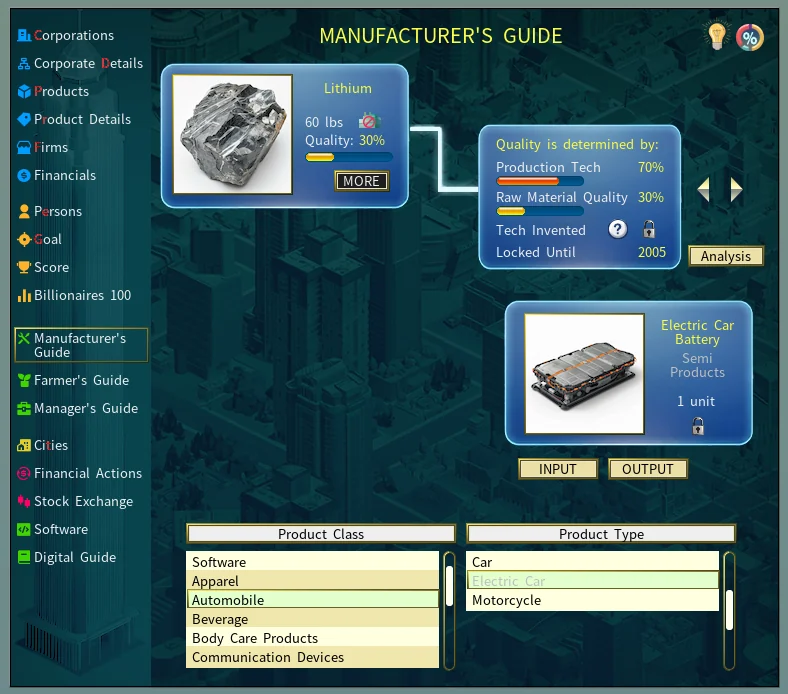
| Electric Car Battery | Lithium |
Electric Car
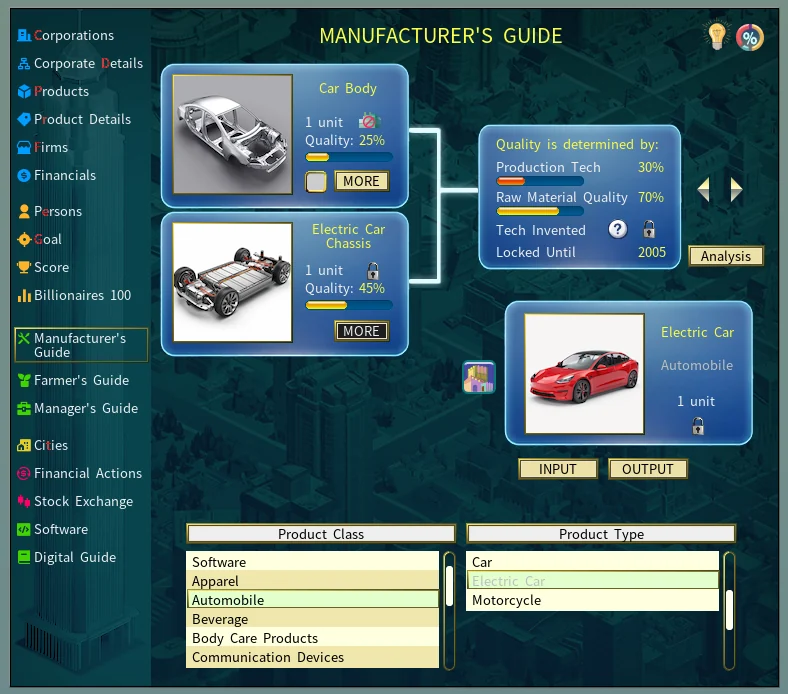
Electric Car Chassis
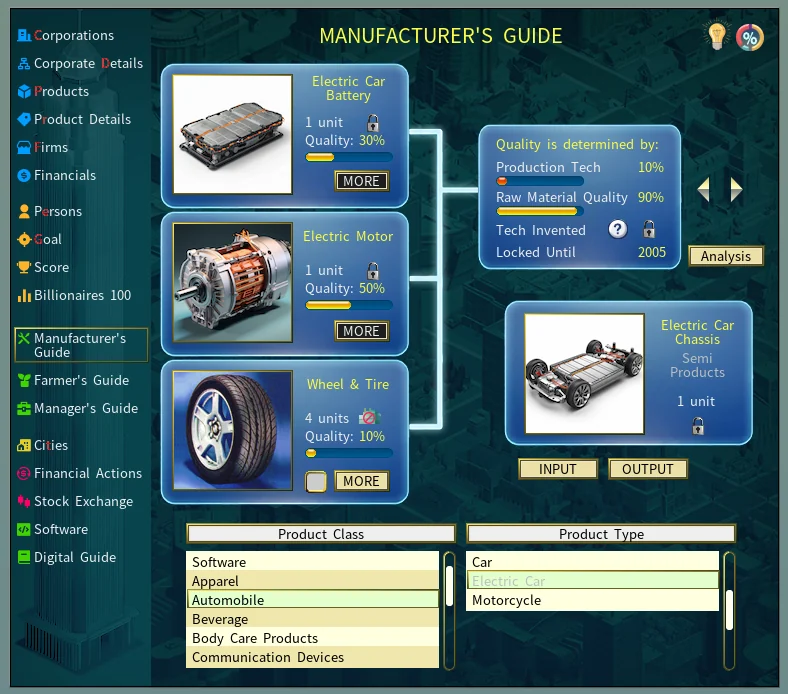
Electric Motor
Electric Car Battery
The battery brings a new natural resource into the game: lithium. That is what makes electric cars a resource-acquisition problem as much as a manufacturing one — securing lithium early is a position, not a purchase.
Market impact
The shift in the private car market is gradual, and it is large: electric cars are projected to eventually take up to 50% of market share.
Investing early can hand you a durable advantage as that transition runs. It also carries the risks of any new technology — adoption that arrives later than you planned for, and consumer preferences that move while you are committed.
Strategic considerations
- Invest in R&D to shorten the invention process.
- Secure lithium and the other resources before you need them.
- Build the whole production chain efficiently — four products deep, so a weak link anywhere stops the car.
- Market them to consumers who do not yet want one.
- Balance traditional and electric production through the transition, rather than switching all at once.