

Retail Simulation Enhancement
Retail simulation now accounts for the customer traffic of a location and the effect of operating a chain — so where you build, and how many you build, both matter.
Customer traffic
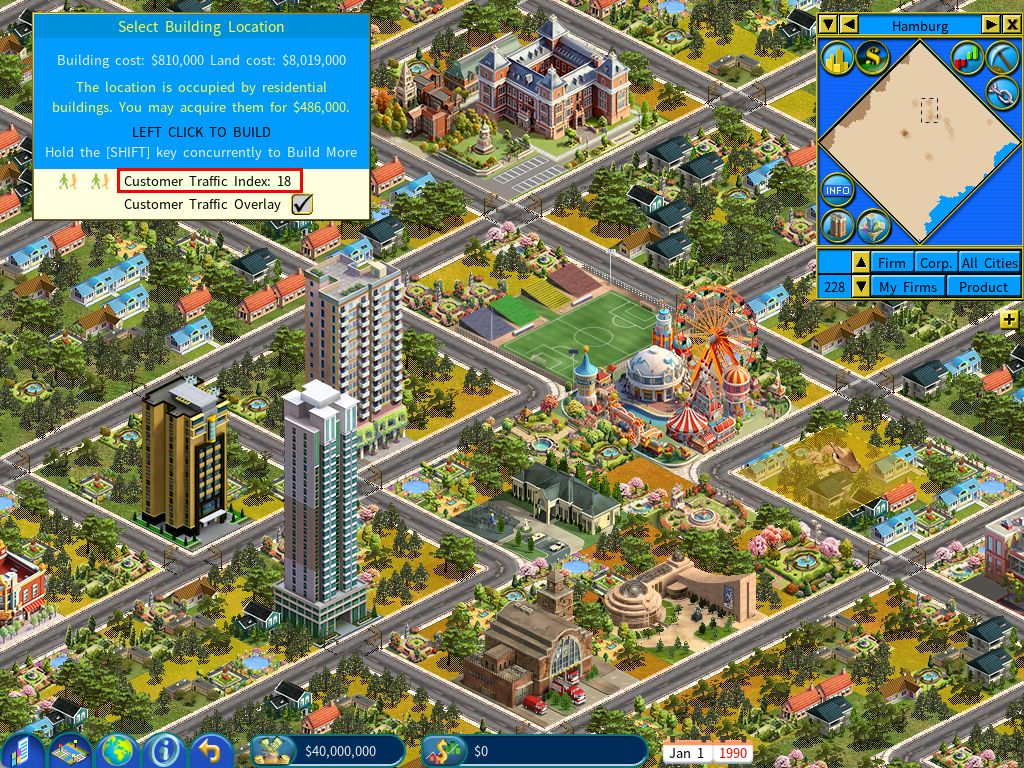
Every location carries a customer traffic index from 0 to 100, visible while you are choosing where to build. Stores in high-traffic areas see greater demand for their products.
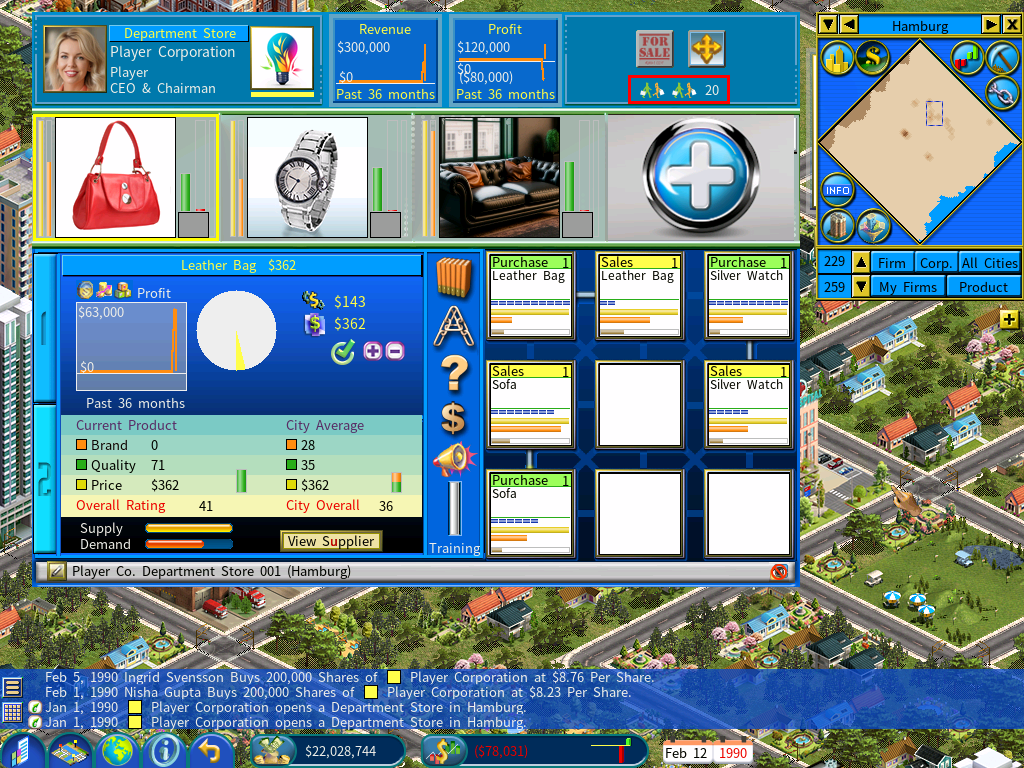
For a store already built, the figure is at the top right of the firm detail window.
Retail Demand Bonus
The Retail Demand Bonus magnifies the effect of customer traffic. High traffic and a large demand bonus together generate a great deal of demand.
Three things raise it:
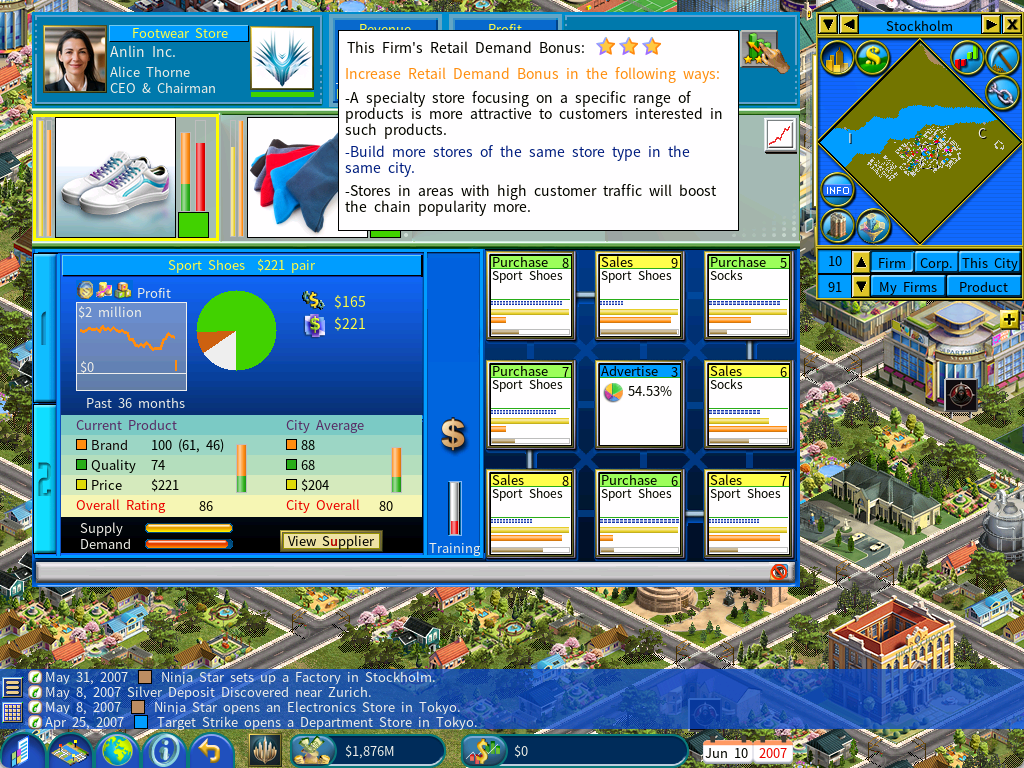
- Specialize. A store focused on one product class is more attractive to customers who want that class.
- Build more of the same store type in the city.
- Build them where traffic is high — those locations boost the chain’s popularity more than quiet ones do.
The indicator sits at the top right of the firm detail window. More stars means a higher bonus.
The retail chain strategy
A network of stores beats standalone outlets, and the two mechanics above are why. Open a series of leather goods stores across high-traffic shopping districts and each one raises the chain’s recognition — which brings more customers to all of them, including the ones you opened first.