

Warehouse
A warehouse is a storage buffer that stabilizes your supply chains — feeding raw materials to your factories and finished goods to your retail stores.
Give one a large capacity and let it take inputs from several sources, and it smooths out the supply inconsistencies that agricultural products in particular suffer from, where the harvest arrives in bursts and the demand does not.
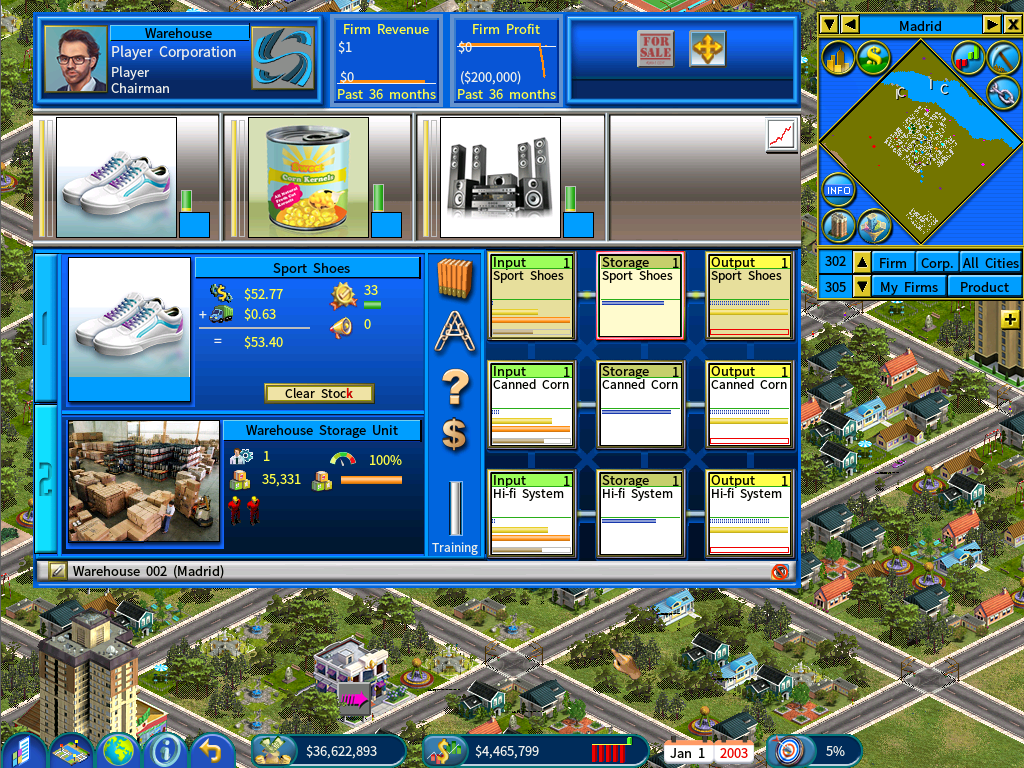
What a warehouse is like to run
- Setup and operating costs are significantly lower than a factory’s.
- It stores raw materials or finished goods.
- It comes in two sizes — the larger has double the capacity and throughput of the standard one.
Functional units
Three units mirror the ones you know from a factory:
| Warehouse unit | Equivalent to |
|---|---|
| Warehouse Input Unit | Purchasing Unit |
| Warehouse Storage Unit | Inventory Unit |
| Warehouse Output Unit | Sales Unit |
Their storage capacity and throughput are three times that of the equivalent purchasing, sales and inventory units in a factory. That ratio is the whole reason to use a warehouse rather than more factory space.
Two further units can be set up:
- Private Labeling Unit — converts products bought from a third-party supplier into your own brand.
- Advertising Unit — advertises the products in the warehouse. Convenient alongside private labeling, since the products you are branding are already here.
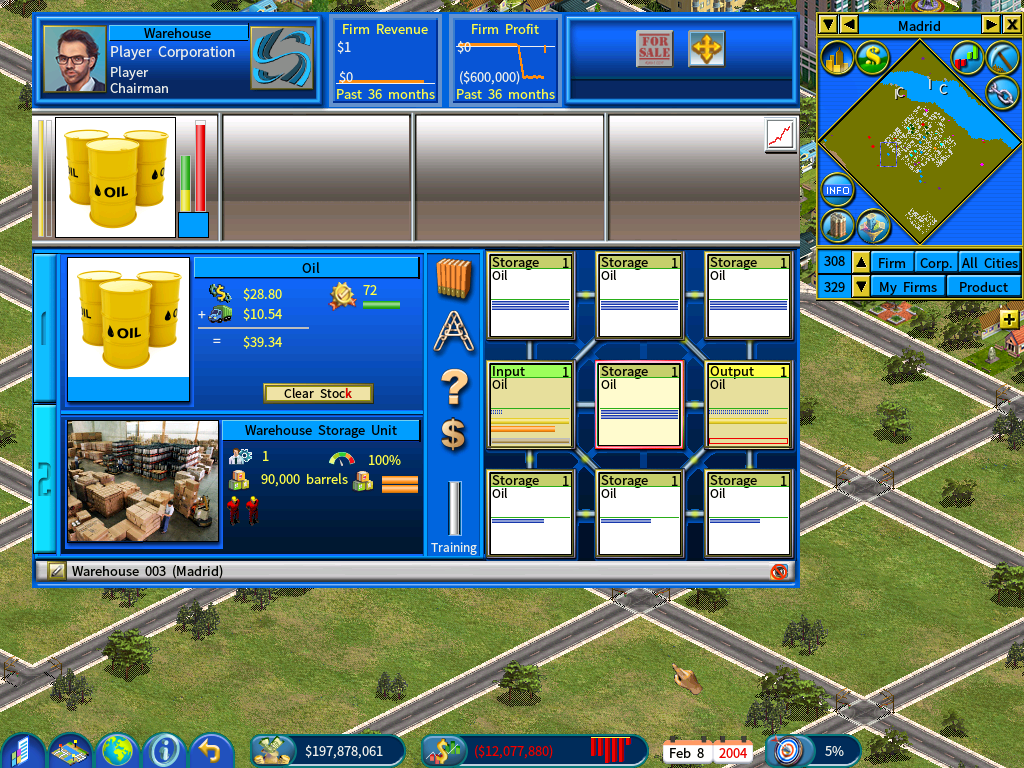
This one holds a massive quantity of crude oil, bought in anticipation of rising oil prices — a warehouse used as a speculative position rather than a supply buffer.