
Farm Equipment
Farm Equipment is a feature of the Experimental DLC that adds depth — and a real capital decision — to agricultural operations.
Why it changes farming
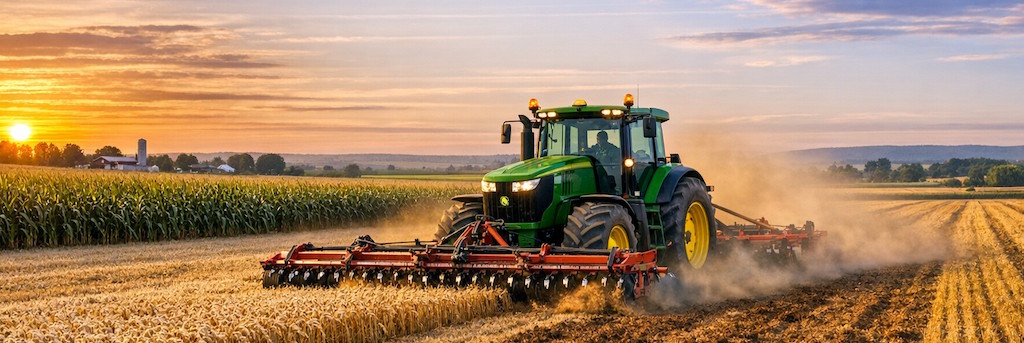
In the base game, the quality of agricultural products comes entirely from training and leveling up farming units. That works, but some players found it too straightforward: high-quality output with no additional investment or planning behind it.
With Farm Equipment enabled, training and leveling give smaller bonuses. To reach high product quality you must also invest in equipment for your farming units — so the quality and quantity of machinery now matters as much as the skill of the people.
It is also a business
Farm equipment is not only a cost. You can build factories to manufacture it and profit from the B2B demand every farm on the map generates.
For a company with large farming operations, producing it in-house is a real advantage: supply your own farms instead of buying from outside, keep the profit inside the group, and stabilize both margins and supply.
Turning it on
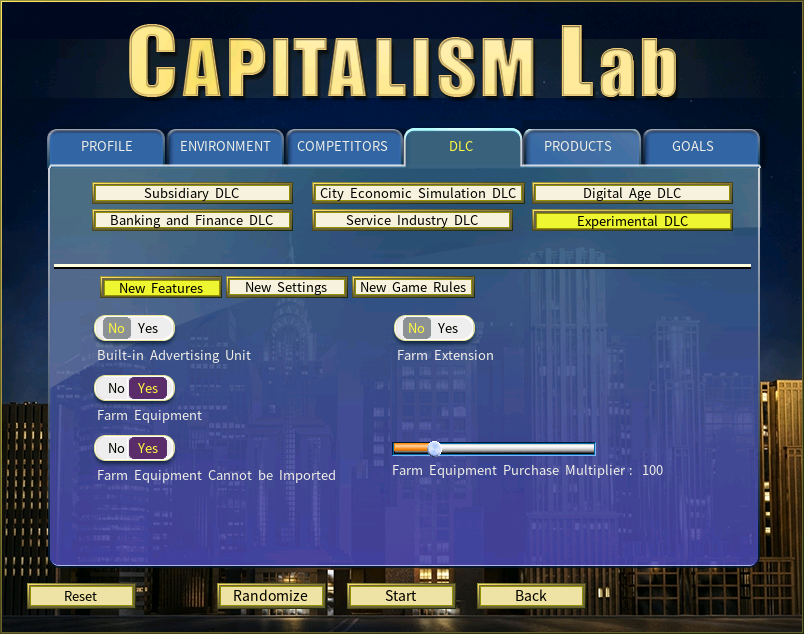
Open the Experiment tab of the new game settings menu and enable Farm Equipment.
| Option | What it does |
|---|---|
| Farm equipment cannot be imported | Seaports and import companies never bring it in, so corporations have to manufacture it domestically to supply the market. |
| Farm equipment purchase multiplier | How much equipment is needed for the same effect. 100 is normal; above 100 means more must be bought — which raises the revenue of farm equipment manufacturers. |
Pro tip. Raise the purchase multiplier to 150 or 200 and farm equipment becomes a significantly more important part of the game.
Manufacturing it
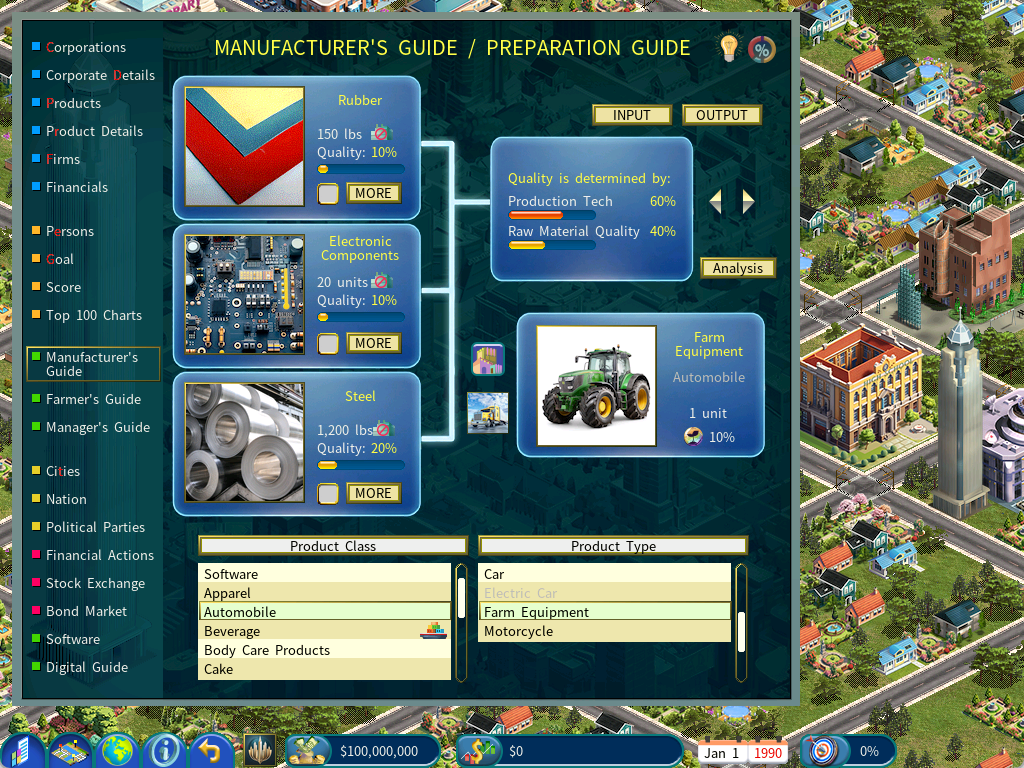
Farm equipment sits under the Automobile product class. Set up a factory and produce it exactly as you would any other product.
Buying it for your farm
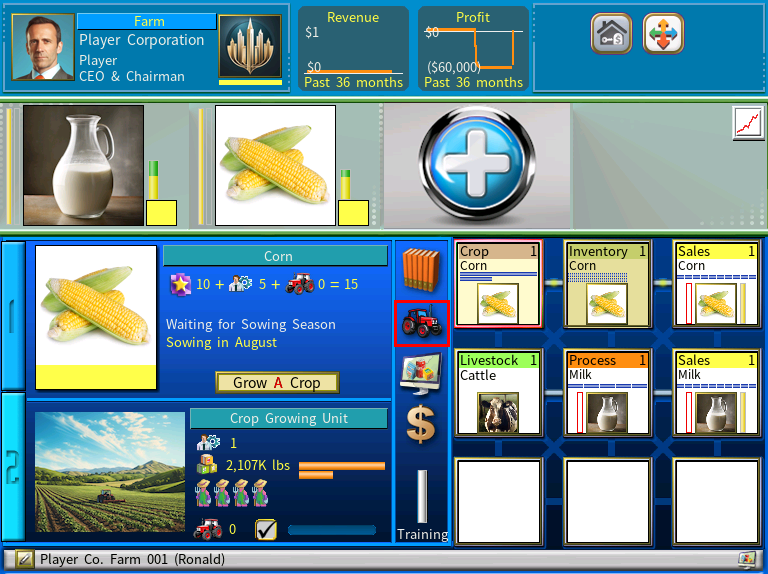
Open the purchase menu
Click the Farm Equipment icon.
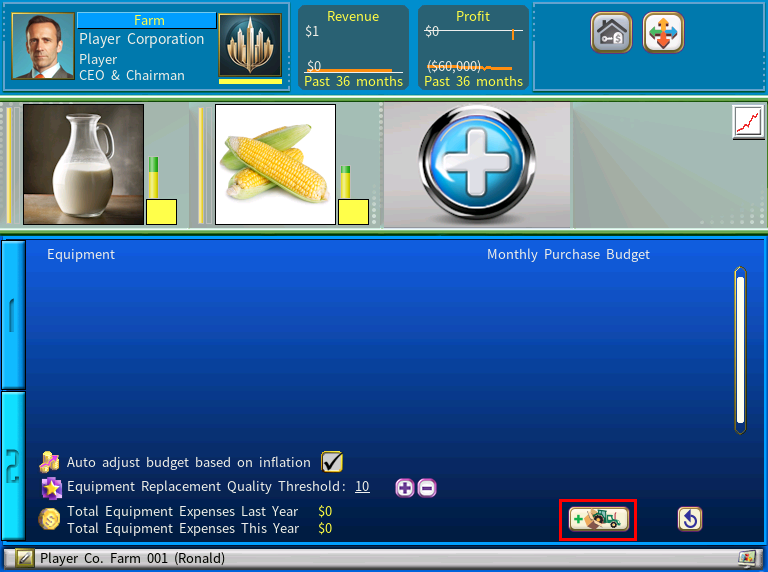
Add a supplier
Select who to buy from
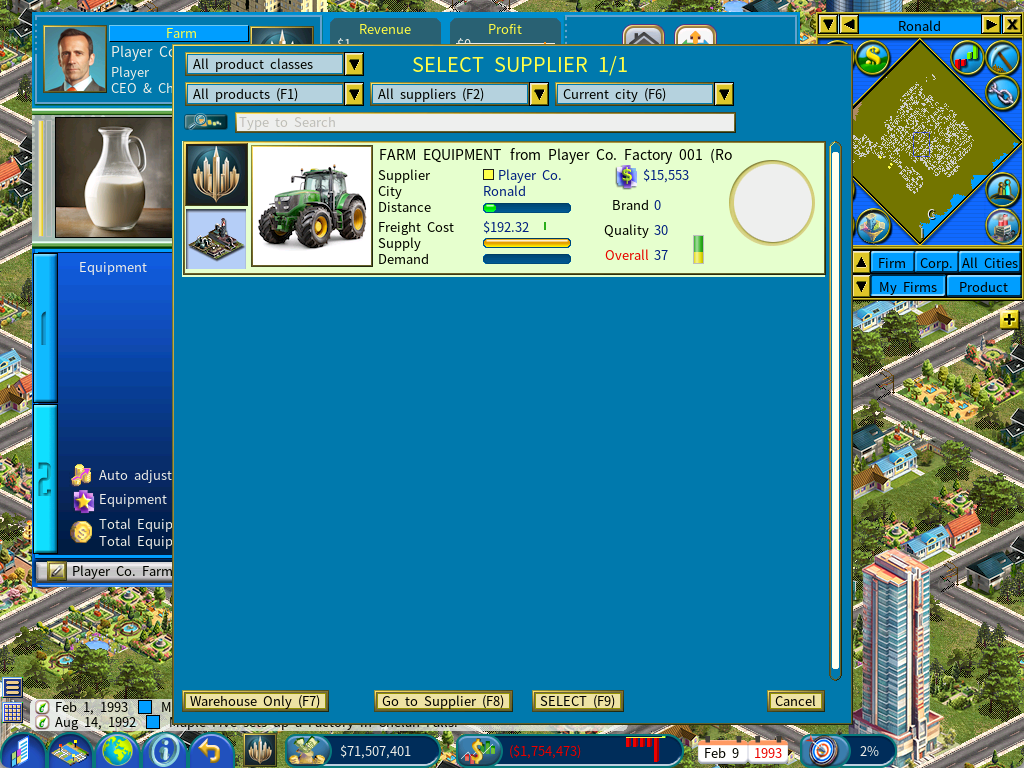
Early in the game there may be no suppliers at all — in which case you have to build the factory yourself. AI companies establish farm equipment factories as the game progresses and the market fills in.
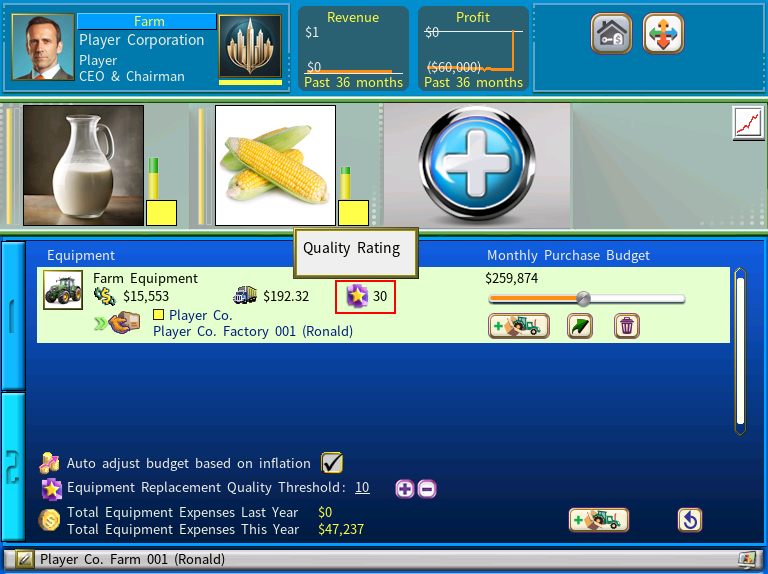
Set the monthly budget
The farm then buys new equipment each month until it needs no more.
Watch the quality rating of what you buy. It directly sets how much productivity and quality your farm products gain — see the formula below.
How farm product quality is calculated
With the feature enabled, quality is the sum of three components:
10 (base quality)
  + unit's experience level  (max 45)
  + farming equipment        (max 45)
1. Base quality
A constant 10.
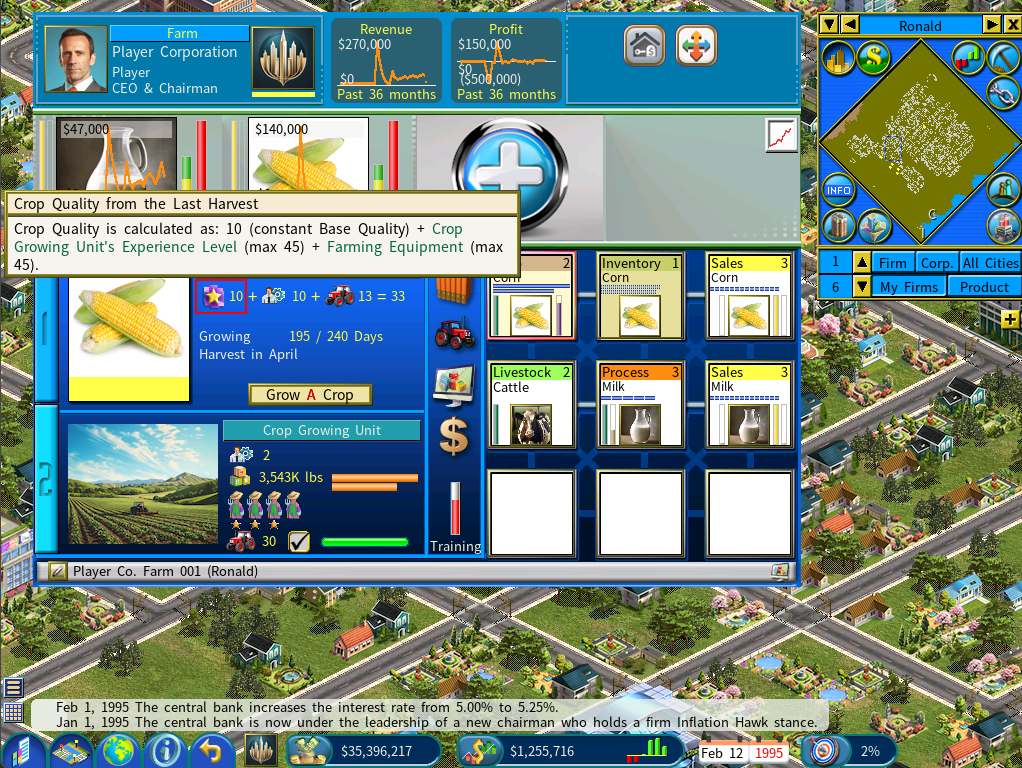
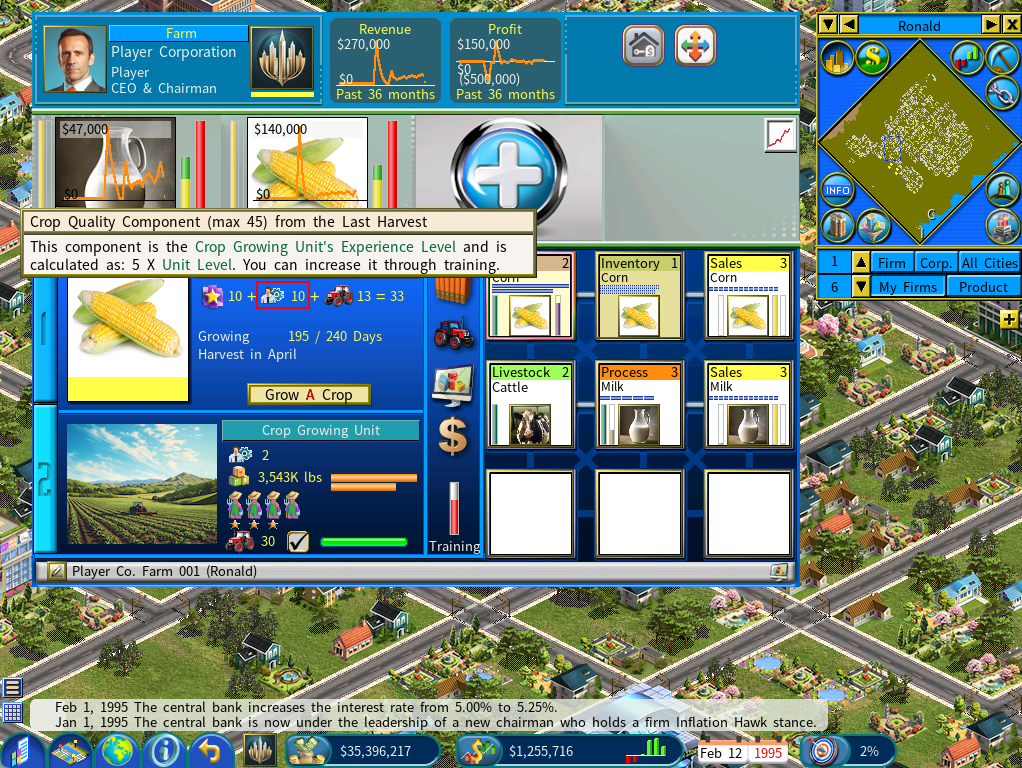
2. Unit experience level
Raised through training. For a crop growing unit the maximum is 45:
5 × unit's levelSo a level-2 unit contributes 5 × 2 = 10.
3. Farming equipment
Also a maximum of 45 for a crop growing unit:
45 × equipment quality / 100
   × equipment quantity purchased for this unit / required equipment quantity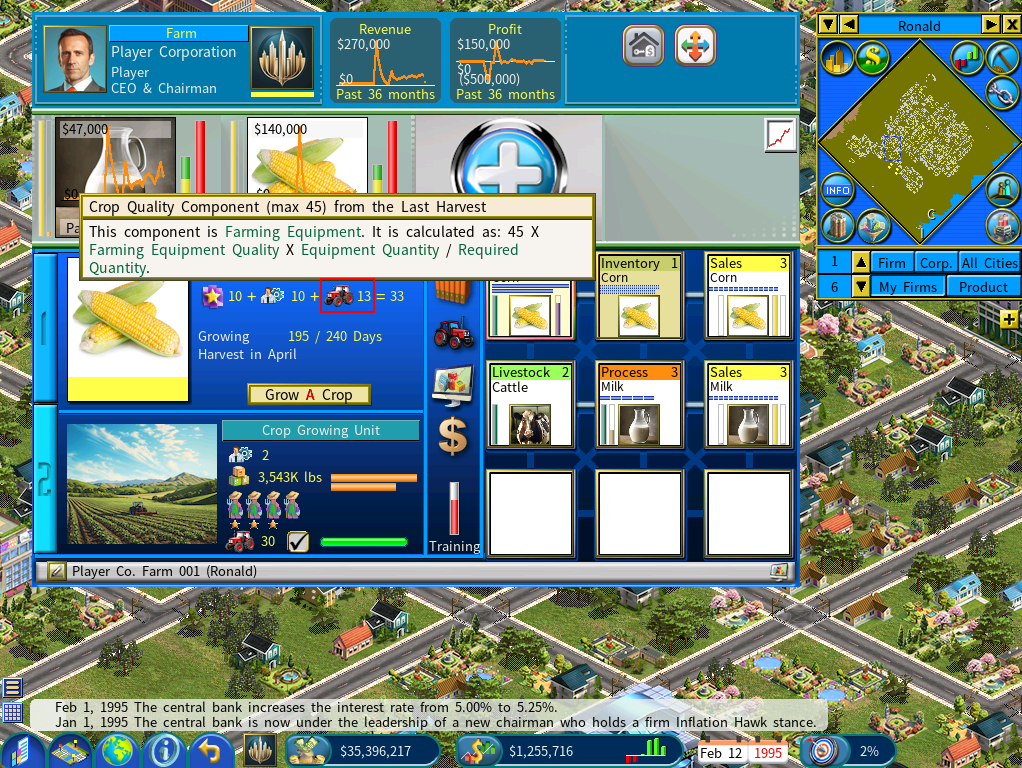
Hover over the farm equipment display to see the quality and quantity figures.
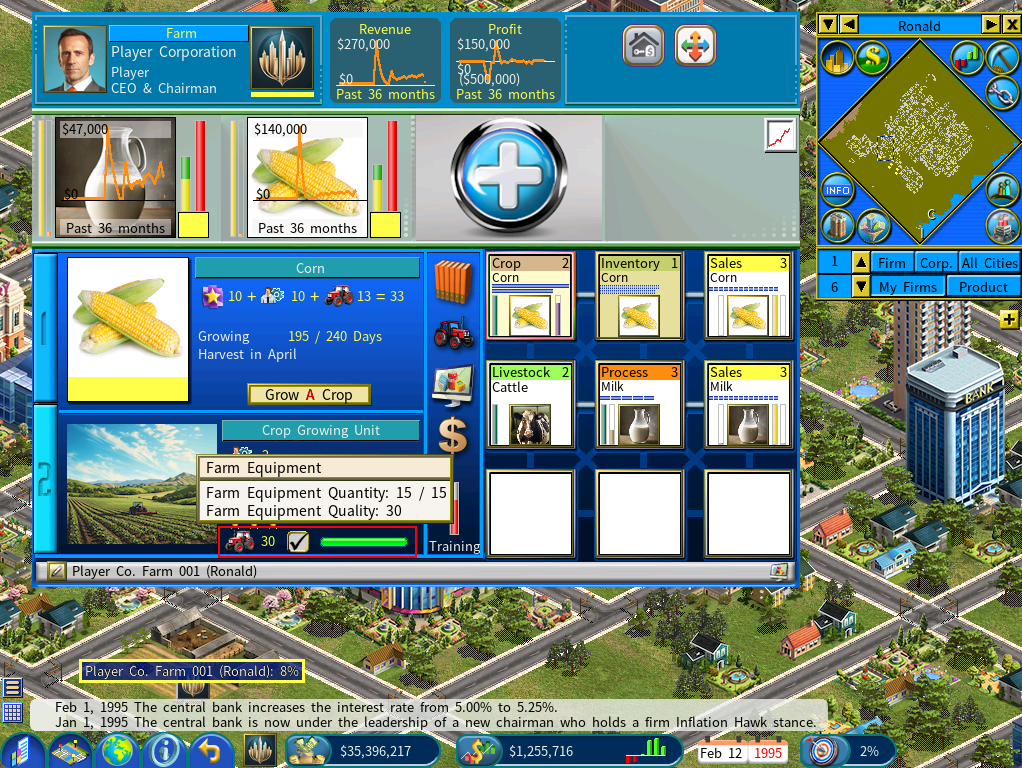
Worked example. 45 × quality (30) / 100 × quantity purchased (15) / required (15) = 13.
Total product quality: 10 + 10 + 13 = 33.
Two things that catch people out
- Quality is fixed at the last harvest. A unit that was level 2 at harvest and is level 3 now still produced level-2 quality. The same applies to equipment quality and quantity — only the values at harvest time count.
- Livestock units use different weightings. Livestock raising units and livestock processing units calculate livestock quality and livestock product quality with their own formulas. The tooltips on their displays give the detail.
Training costs are reduced to compensate
With the feature on, training costs for farming units drop to 70% of normal. That offsets the new capital investment in machinery, which now works alongside training and experience rather than instead of it.
Stopping equipment purchases
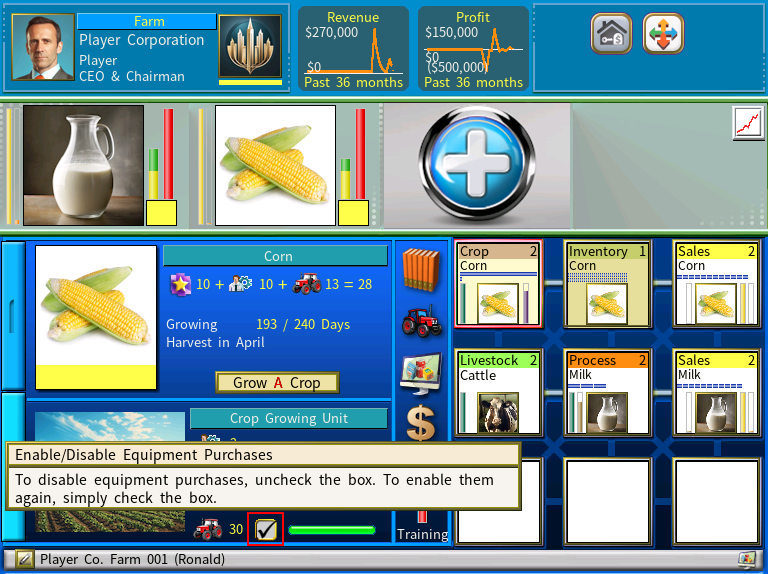
Clear the checkbox highlighted below to stop a unit buying equipment.
Equipment replacement quality threshold
This decides when a farm automatically upgrades equipment it already owns to better versions on the market.
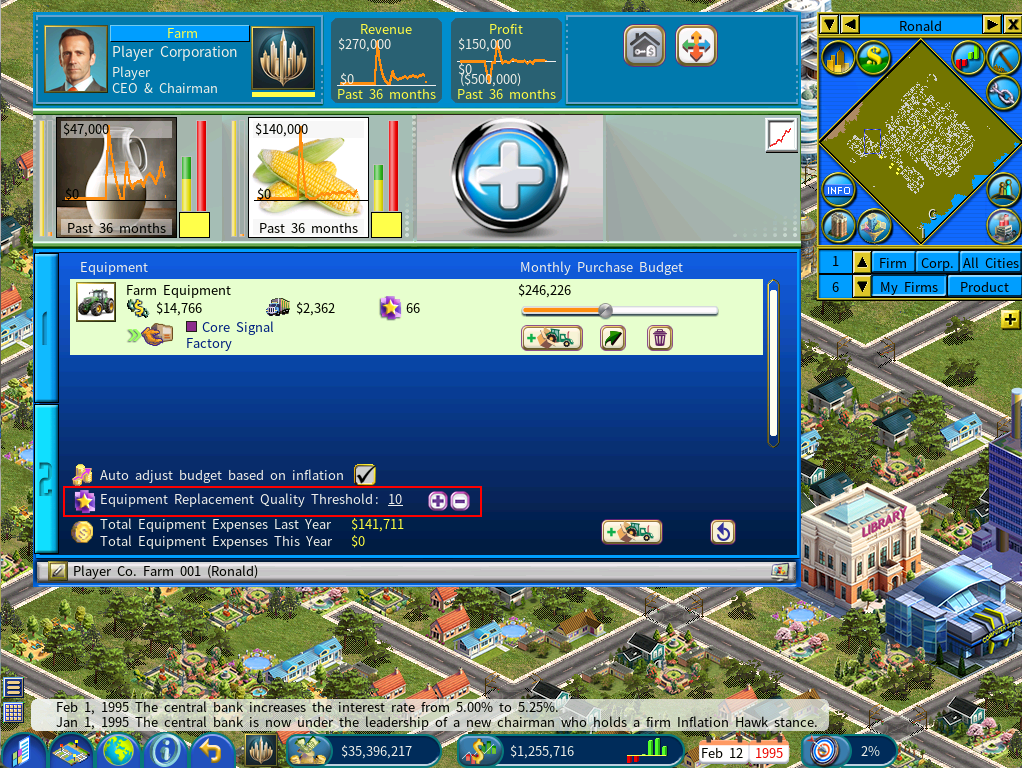
Even fully equipped, a farm keeps watching the market. When something available exceeds its current equipment’s quality by at least the threshold, it buys and replaces.
Example. Current equipment quality 30, a supplier offering 50, threshold set to 10. The gap is 20, above the threshold, so the farm replaces automatically.
The trade-off: a lower threshold means more frequent upgrades and higher operating costs; a higher one keeps costs down but slows quality improvement.
B2B sales to farms
The indicator below shows what percentage of your farm equipment sales goes to farms as B2B.
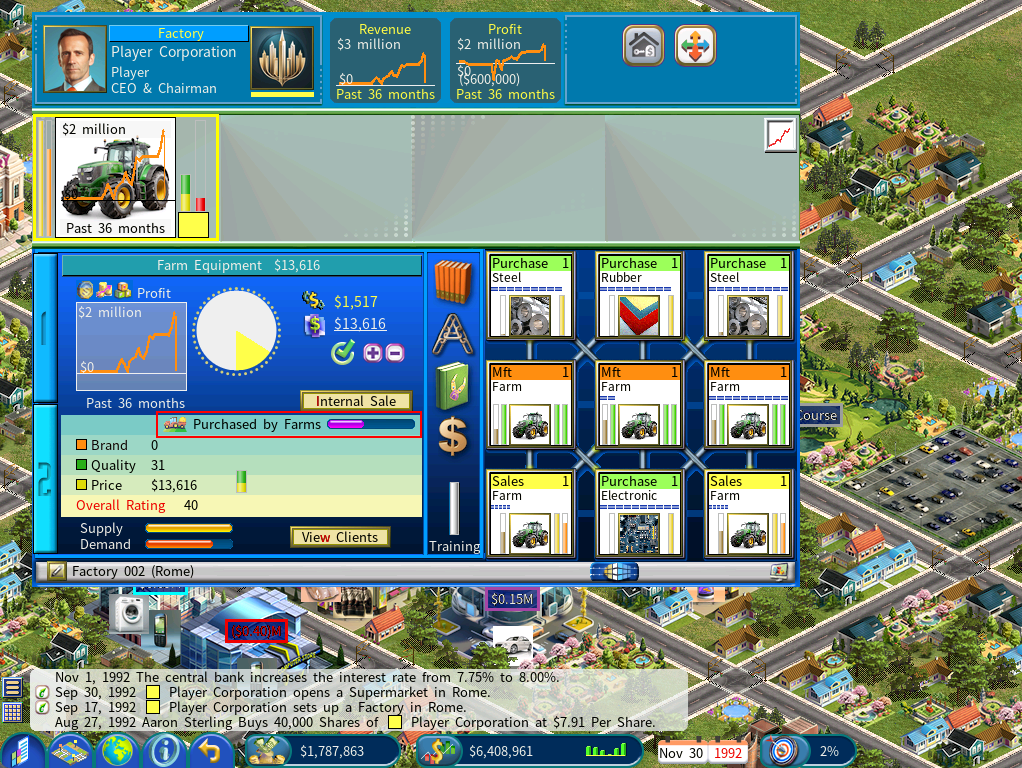
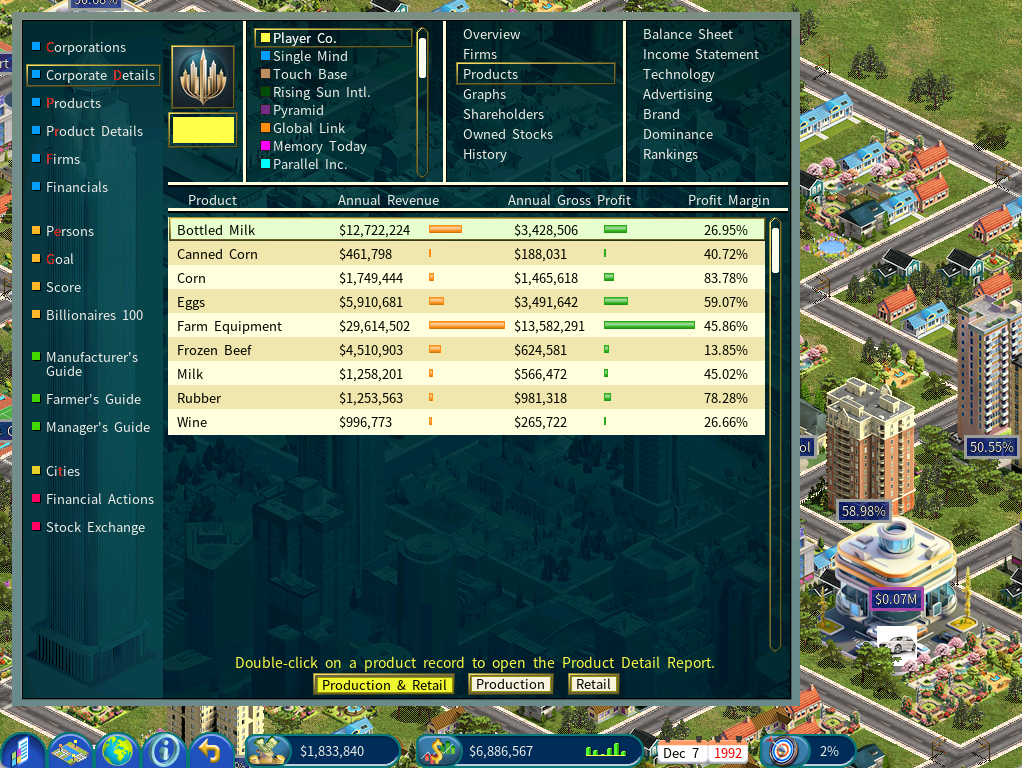
Here a farm equipment manufacturer’s profits are surging across several channels at once — B2C through automobile outlets, and B2B to both its own farms and farms owned by other companies.
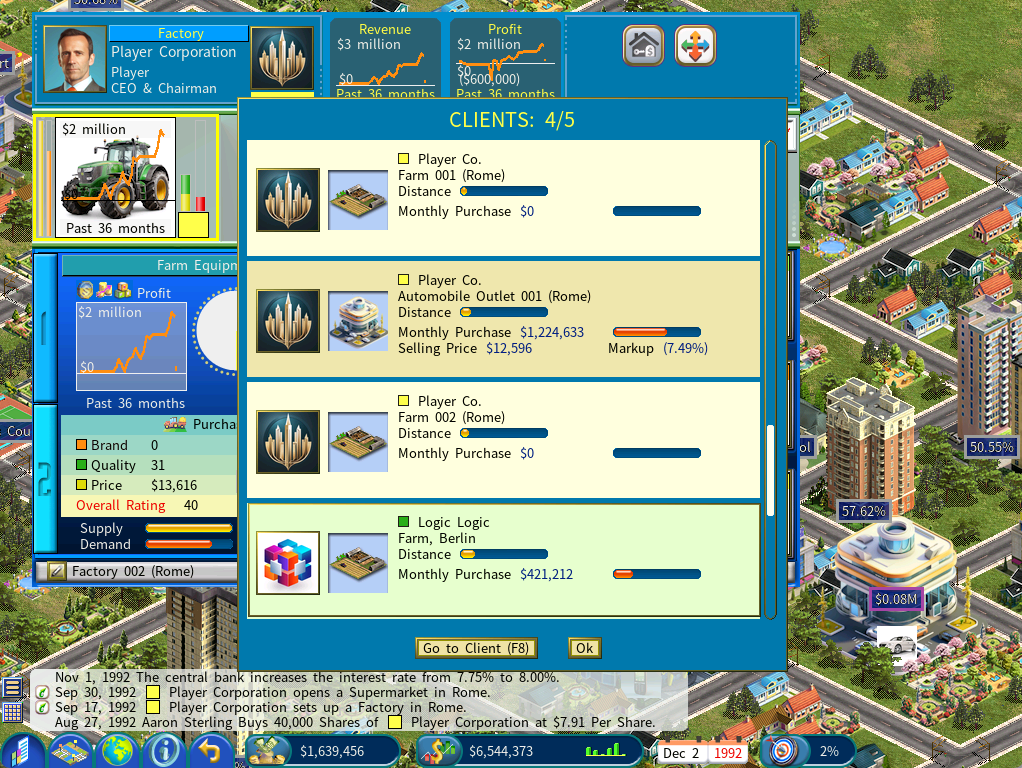
Farm equipment is the largest single contributor to this company’s profit.
Video walkthrough
Building a self-sufficient farming empire while researching and manufacturing the best farming equipment in the game.