

Enhanced Simulation of Apartments and Commercial Buildings
Real estate is a business in its own right, not just somewhere to put a factory.
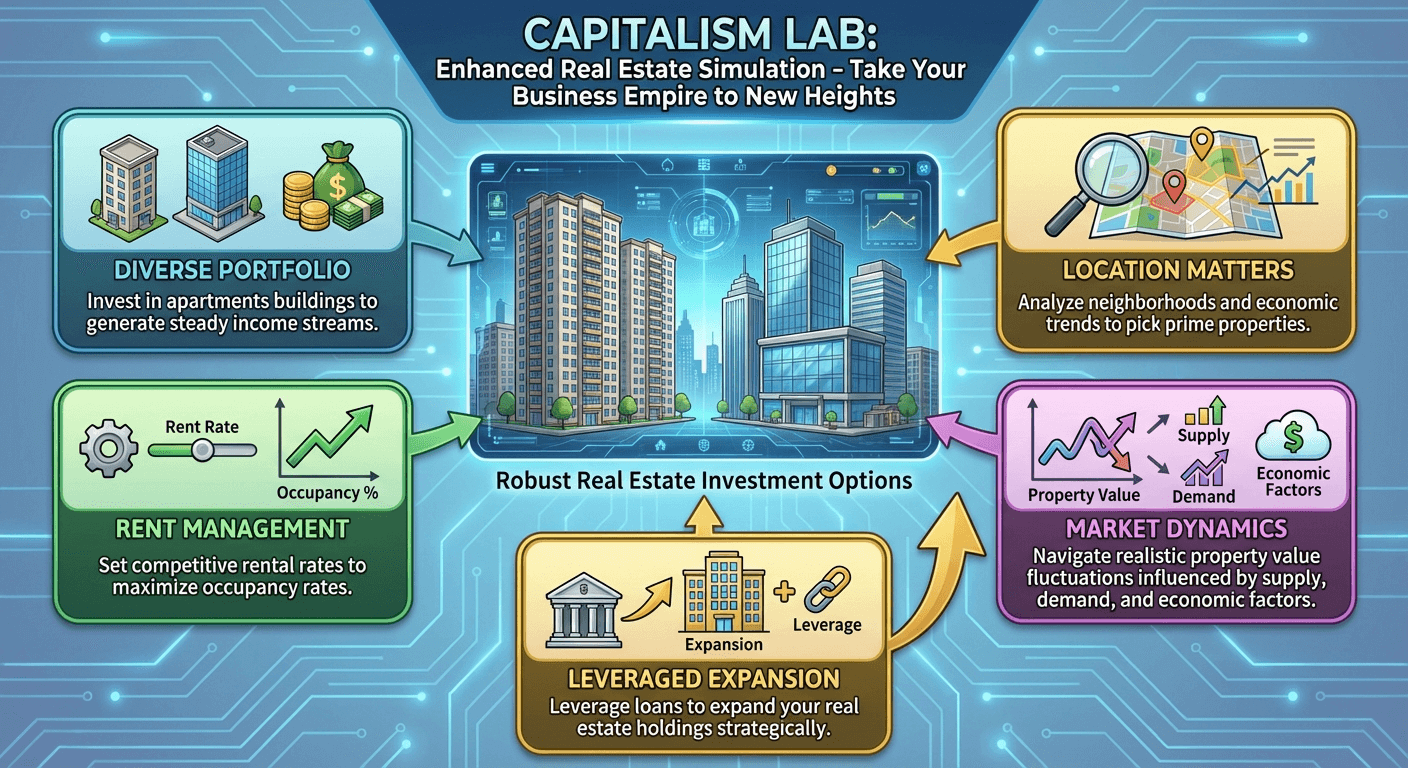
- Diverse portfolio — apartments and commercial buildings generate steady income streams.
- Location matters — analyze neighborhoods and economic trends to pick prime properties.
- Rent management — set competitive rates to maximize occupancy.
- Market dynamics — property values fluctuate realistically with supply, demand and the economy.
- Leveraged expansion — use loans to grow the portfolio strategically.
Apartments
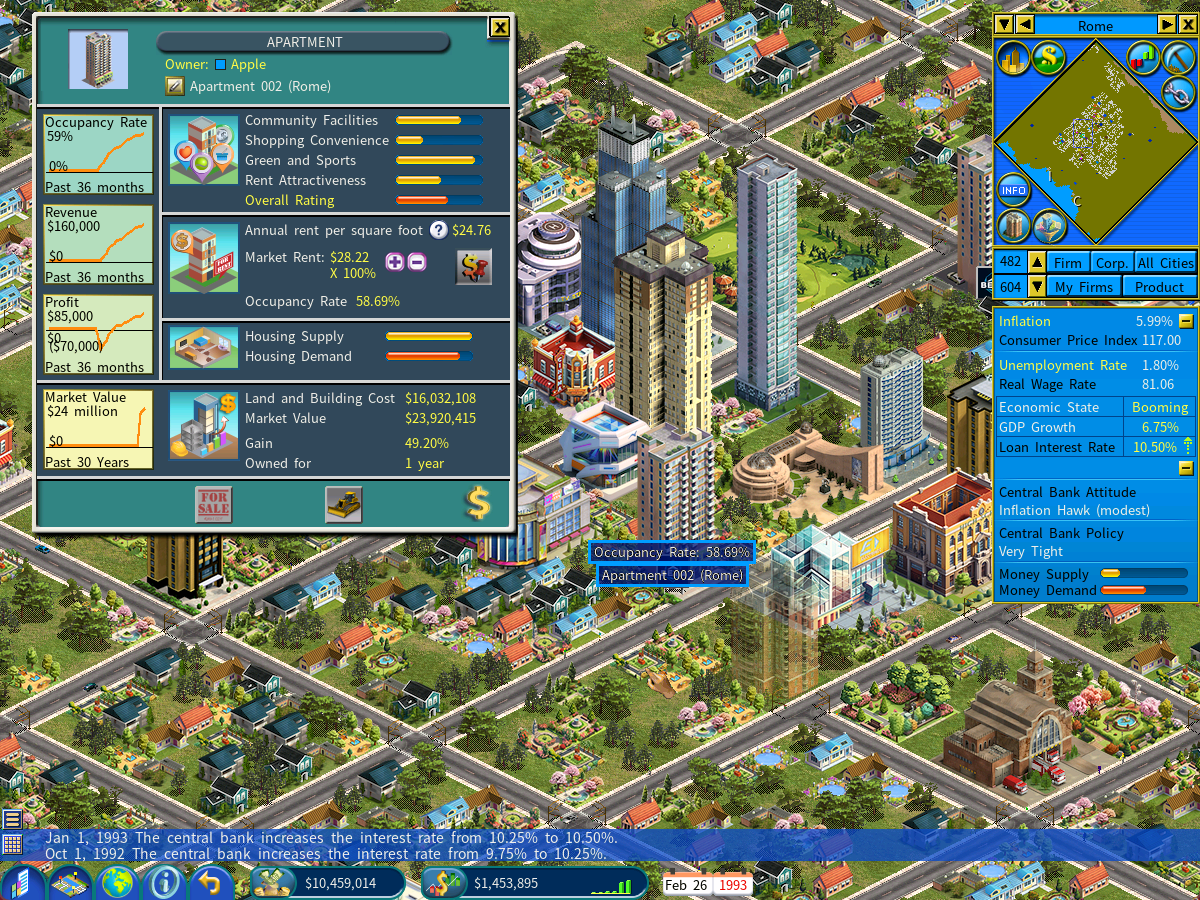
Rents and market values move with two things:
| Factor | How it works |
|---|---|
| The state of the economy | Housing prices rise in a boom. |
| Access to amenities | People pay more for apartments with good access to community and sports facilities, a green environment and shopping convenience. The ratings for each are in the Apartment Info window. |
Commercial buildings
| Factor | How it works |
|---|---|
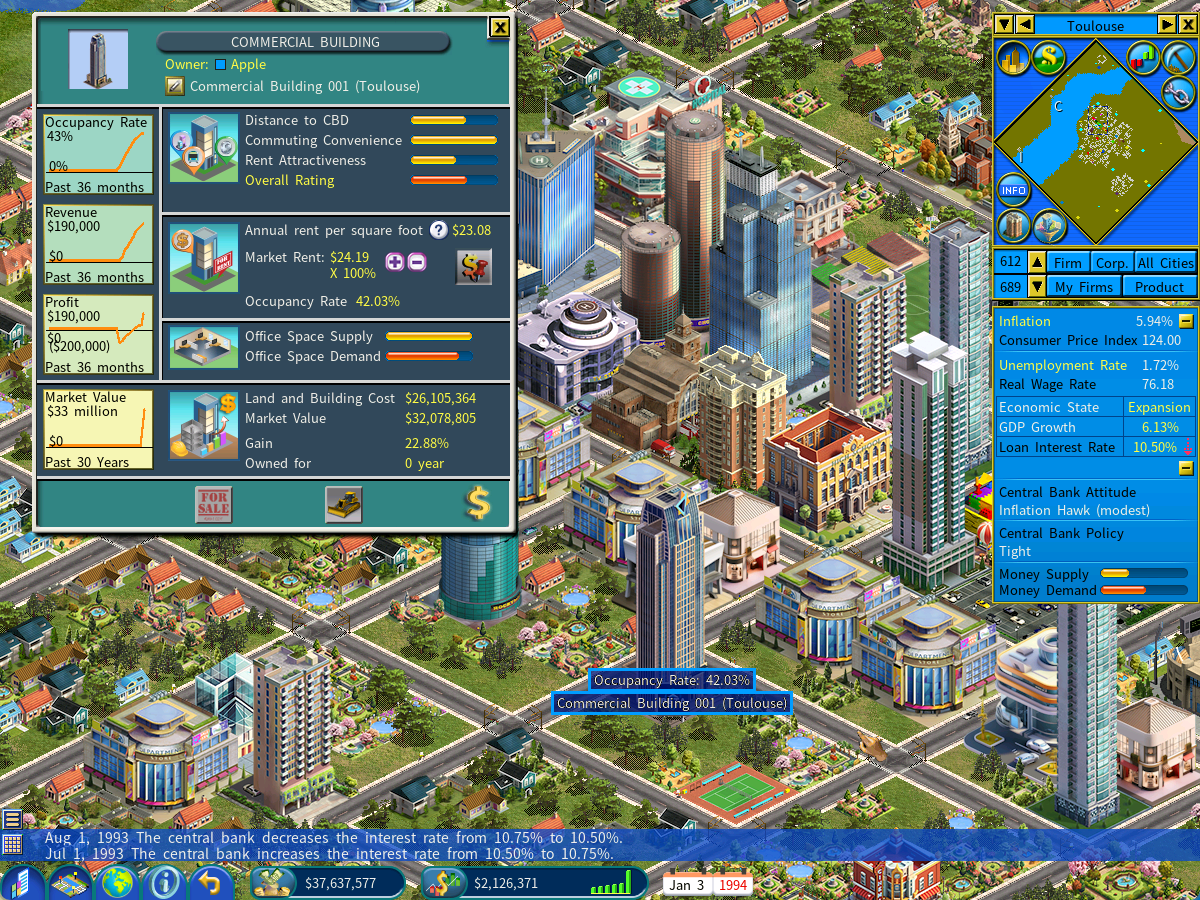
| The state of the economy | Prices and rents rise in a boom. |
| Location | Companies pay more in the central business district. Commuting convenience matters too — a building remote from residential areas tends to sit at a low occupancy rate. |
The real estate bubble

Property prices rise when interest rates are low, for two reasons at once. A low mortgage rate makes housing affordable to more people — and when bank deposits yield almost nothing, investors go looking for returns elsewhere, including rental property.
A booming economy with high GDP growth adds to it, pushing people to invest more aggressively across every kind of asset.
A bubble needs both conditions together: high GDP growth already driving prices up, and a central bank holding the interest rate low.
That combination is rare, because high GDP growth usually spurs inflation and the central bank responds by hiking rates. It takes the unusual case — strong growth without notable inflation — for rates to stay low long enough for a bubble to form.
Also see
- The Evolution of Shanghai from 1990 to 2010 — a scenario where you acquire a large piece of land and develop a new residential area from the ground up.