

Increasing GDP Growth
The City Economic Simulation DLC simulates Gross Domestic Product in detail — the total value of all final goods and services your city produces. A higher GDP raises tax revenue, lifts residents’ incomes, and keeps the city competitive globally.
The four components of GDP
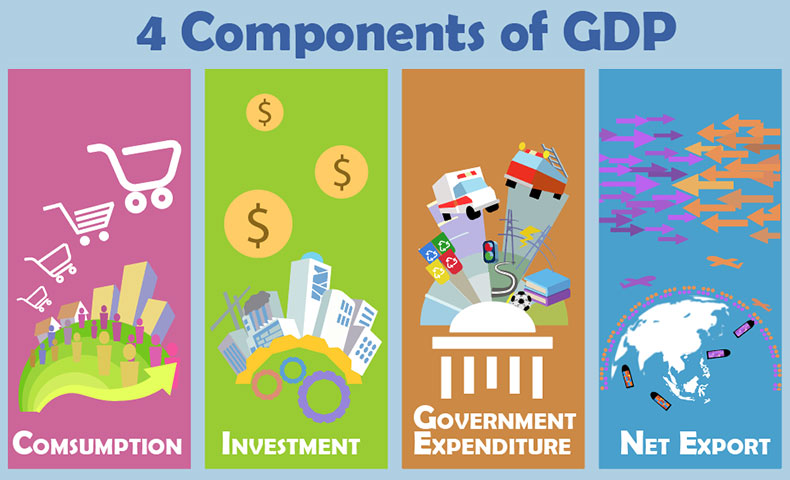
| Component | What it measures | Who controls it |
|---|---|---|
| Consumption | What citizens spend on goods and services | Indirectly — through tax and employment |
| Investment | What businesses spend on construction and expansion | Indirectly — and directly, as a corporation |
| Government spending | Infrastructure, healthcare, education, research | Entirely yours, as mayor |
| Net exports | Exports minus imports with other cities | Indirectly — through product quality |
Consumption
The more income people have, the more they spend. Three levers move it.
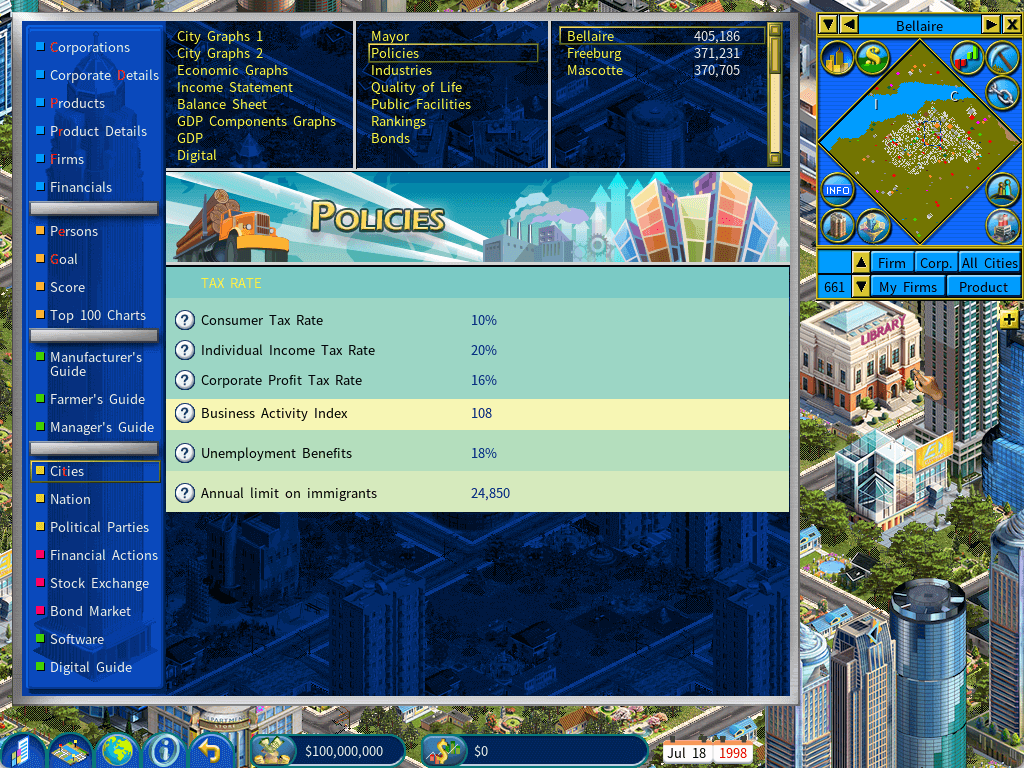
Cut income tax
A lower rate leaves people a larger share of their earnings, and that disposable income becomes consumption.
The catch: lower taxes also cut government revenue, which limits what you can spend on public services. Both sides count towards GDP.
Encourage immigration
New residents widen the customer base for local businesses — at the cost of greater demand on housing and public services.
Create jobs
As a private corporation, opening new businesses reduces unemployment. More people in work means more consumption.
Investment
Investment is what businesses spend to expand capacity, improve technology and grow. Getting them to spend rather than hoard profits is the point.
Lower business taxes
Businesses that keep more of their revenue build more factories, retail stores and other facilities.
Promote education and specialization
Better universities and sponsored research produce a skilled workforce, and a skilled workforce encourages businesses to innovate and enter new markets.
Build it yourself
Your own company expanding is investment. You do not have to wait for anyone else’s decisions.
Government spending
Unlike the other three, this one is entirely under your control as mayor.
Allocate the budget
New schools, hospitals and similar projects stimulate growth — better education raises workforce skill, which feeds back into everything else.
Watch the deficit. Sustained overspending forces you to raise taxes or cut spending later, and that slows growth just when you were building momentum.
Fund universities and research
Direct funding counts towards GDP as government spending on the day it is spent, and raises the city’s productivity thereafter.
Net exports
The difference between what you sell to other cities and what you buy from them. A positive figure injects money into the local economy.
Raise product quality
To export more than you import, your products must compete on the world market. Specialized university research is how their quality gets there.
Minimize imports
Manufacture locally wherever it is practical, so money stays in the city. Some imports remain sensible where domestic production would be too costly — aim for balance, not for zero.
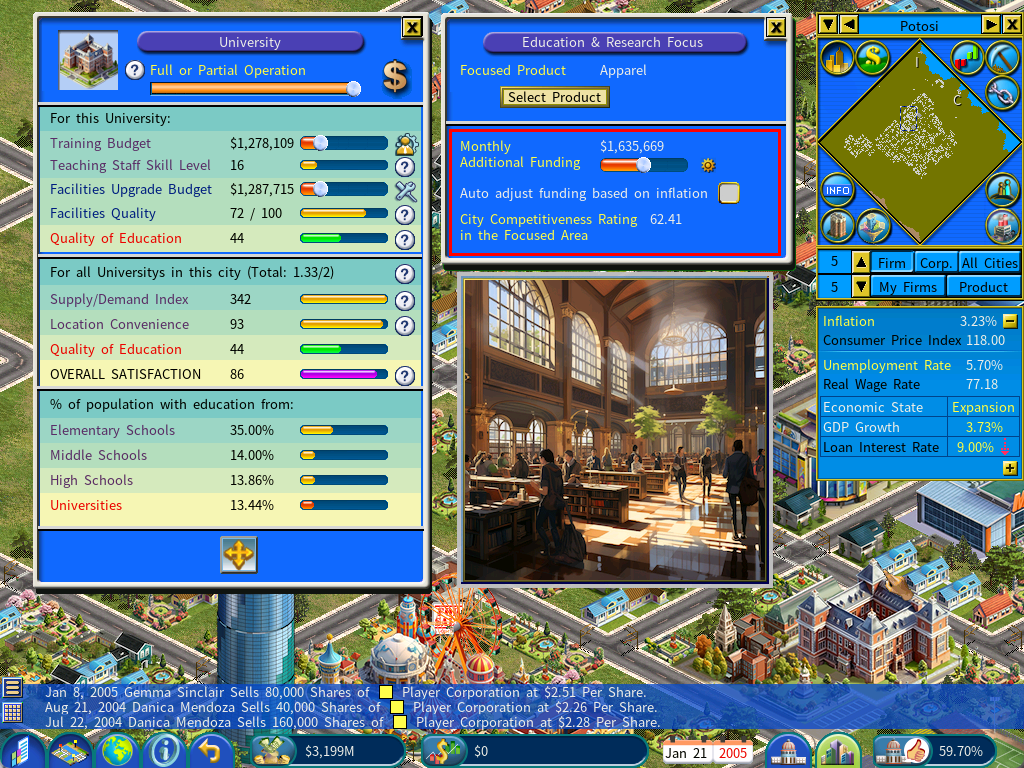
Why university specialization is the strongest single lever
It is the one investment that moves all four components at once.
| Component | How research reaches it |
|---|---|
| Government spending | The funding itself counts, immediately. |
| Net exports | Higher product quality makes your goods competitive abroad and reduces the need to import. |
| Investment | Rising demand for better products forces businesses to expand factories and storefronts. |
| Consumption | Export earnings reach citizens as income, and income is spent. |
Balancing the four
The components are interconnected, so no lever moves only one thing. Cutting taxes spurs consumption and investment but shrinks government revenue. Strengthening education lifts net exports and investment but needs a spending plan behind it.
- Monitor tax rates. Balance market activity against adequate government funding.
- Develop human capital. Skilled workers and strong research facilities make the city a magnet for business.
- Manage deficits deliberately. A short-term deficit is a tool; an unplanned one is a trap.
- Expect feedback loops. Change one policy and watch the data elsewhere before changing a second.