

Service Firms Strategy Guide
By Stylesjl
Service firms extend your business into food and beverage service — fast food, coffee and more. This guide covers how to fold them into a business so they maximize profit rather than merely add revenue.
How a service firm works
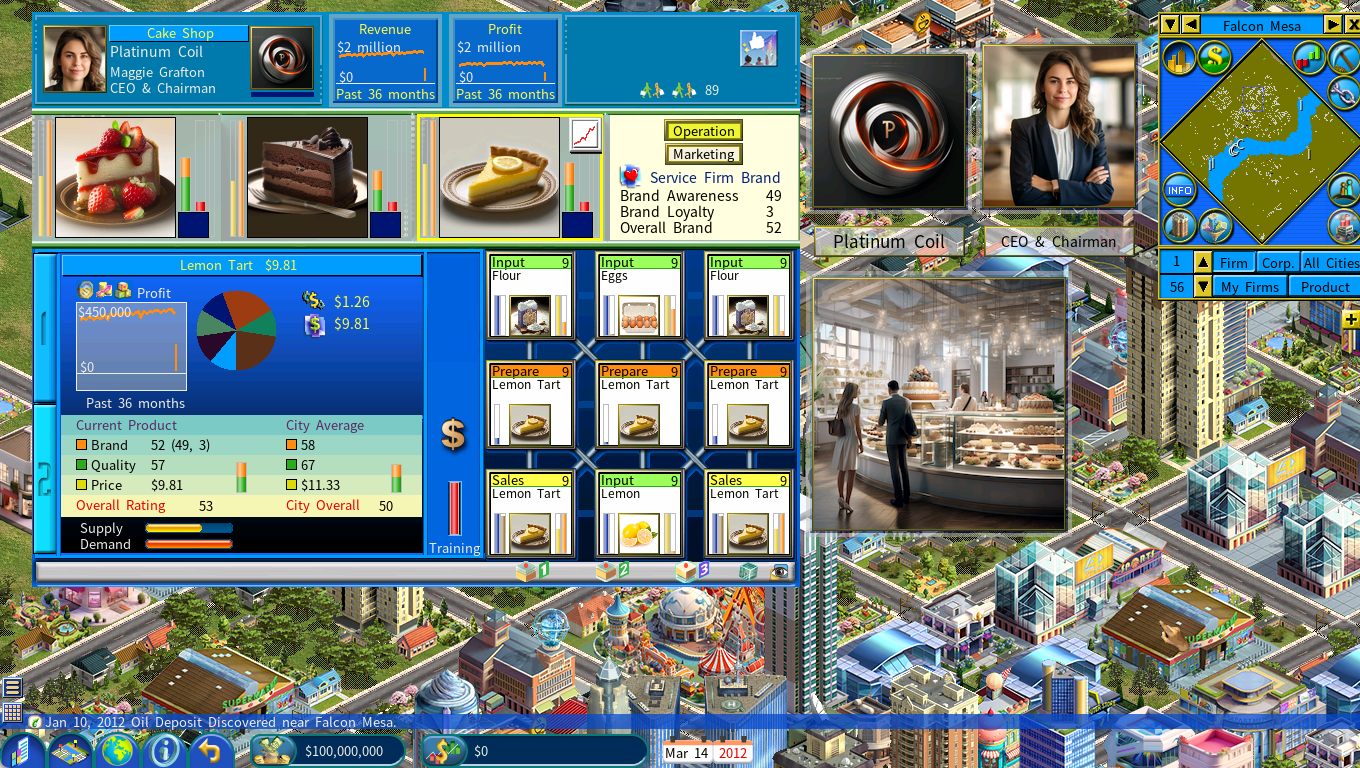
A service firm is a manufacturing firm and a retail firm in one building. It takes basic products — tomatoes, burger patties, burger buns — prepares a hamburger from them the way a factory would, then sells it directly to customers the way a store would.
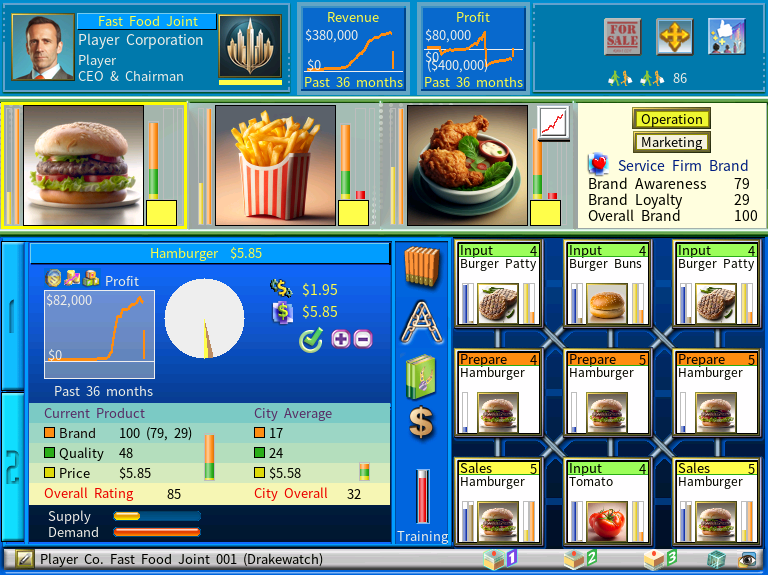
The fast food joint above buys the ingredients (a purchasing unit), prepares them (a manufacturing unit) and sells them (a sales unit).
Three differences from ordinary retail and factory firms
- Brand is per firm type, not per product. There is one rating for your Fast Food Joints, another for your Coffee Shops, and so on.
- You cannot sell service products to other companies. Everything prepared must be sold in the same firm.
- Some ingredients are also retail goods — burger patties and burger buns among them — which is what lets a service business and a retail business feed each other.
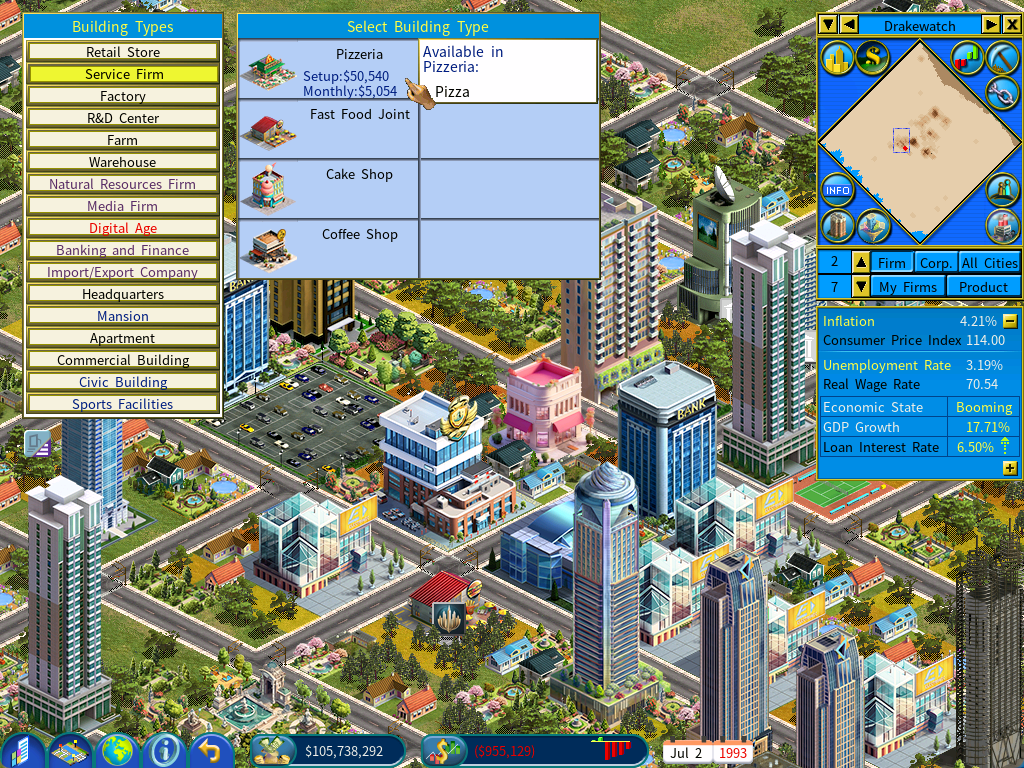
The four firm types
| Firm | Products |
|---|---|
| Cake Shop | Chocolate cake, lemon tart, strawberry cake |
| Coffee Shop | Caffe americano, cappuccino, latte |
| Fast Food Joint | Hamburgers, French fries, fried chicken |
| Pizzeria | Beef pizza, chicken pizza, parma pizza |
Each needs different ingredients, and some ingredients are far easier to obtain than others. That single fact drives most of what follows.
Two broad approaches
- Start with service firms and use their products to expand into other industries.
- Start with another business — food, beverages, snacks — and use its products as the base for moving into services.
Both work. I prefer the second, for the reasons set out below.
Strategy 1: starting with service firms
This is the trickier route. Services are highly competitive and competitors can enter at very low cost, so you need an edge early and you need to hold it.
Which firm to start with, and why it matters so much
The decisive question is which products you begin with, because their ingredients differ enormously in cost.
A single hamburger needs:
- a farm producing tomatoes, frozen beef and wheat
- a factory turning frozen beef into burger patties
- two more factories: wheat into flour, flour into burger buns
Three factories and a farm before you sell anything. And fried chicken and French fries need their own separate, non-overlapping ingredients on top. Fast food is a hard start unless you have money to burn or an existing food industry.
The same problem hits pizza (olives, frozen beef and chicken, tomatoes, flour) and cakes (flour, eggs, lemon, cocoa, strawberry) to a lesser degree.
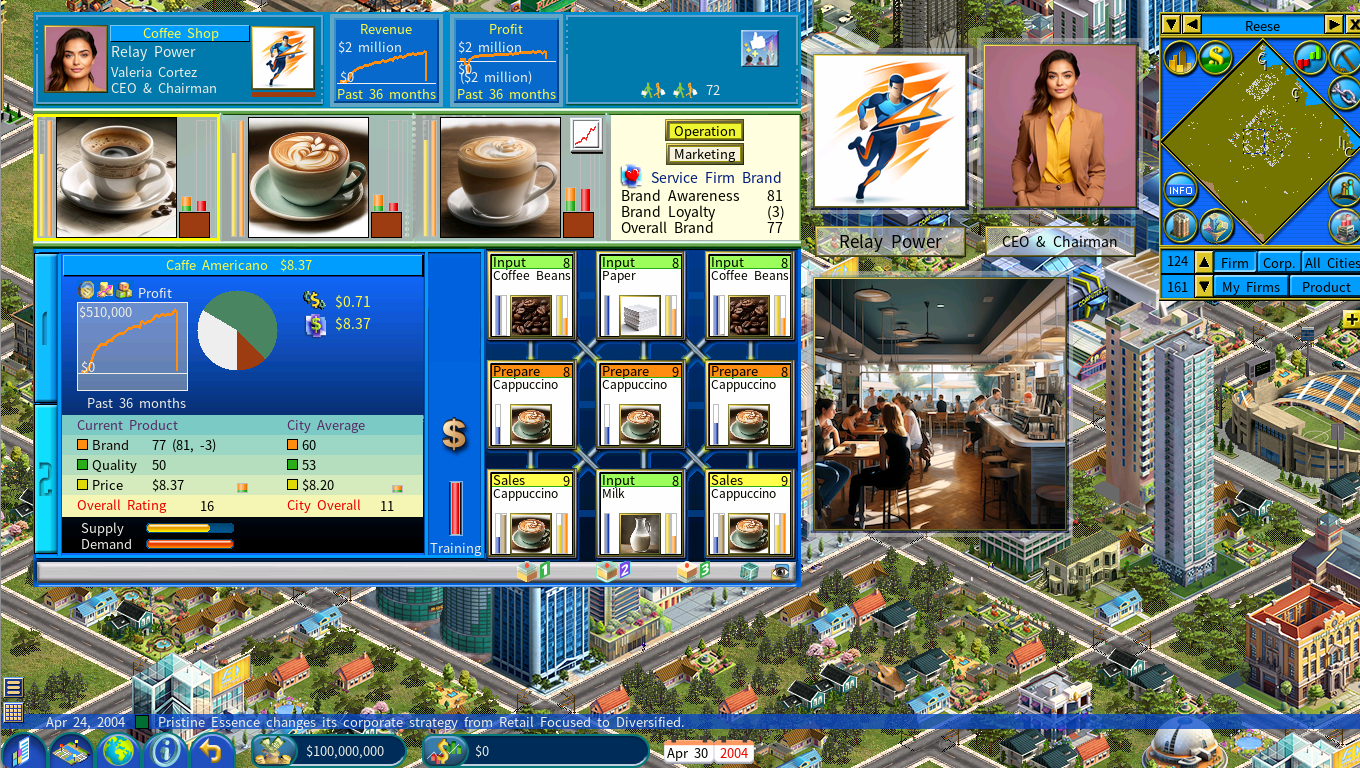
Which is why you should start with coffee. It needs only:
- coffee beans
- milk
- sugar — for one of the coffee types
- paper — for all but one
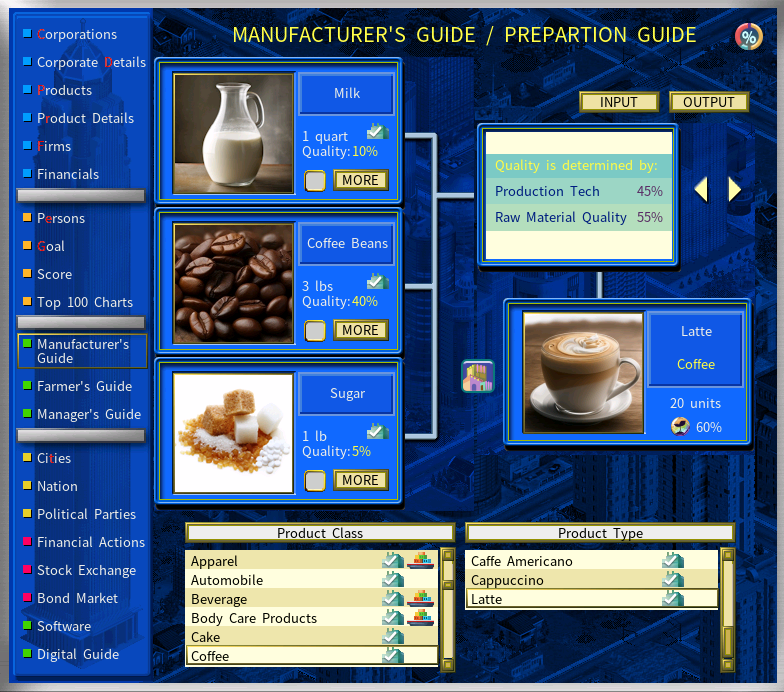
All of those are cheap and easy to get early — with one exception, paper, which the steps below deal with. On a low budget, coffee is the best service firm to start with.
Build a medium farm, close to the city
Proximity keeps freight costs down.
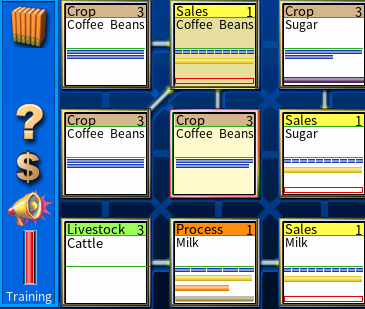
Produce milk, coffee beans and sugar in that one farm
Saving money matters more than anything in the early stages. Set training to maximum so raw material quality reaches 100%.
Build the coffee shop where the traffic is
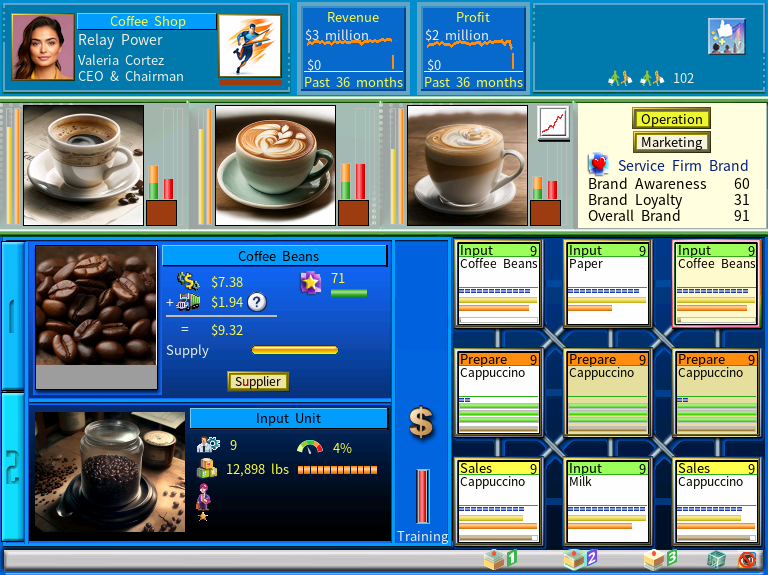
Find available land in a high-traffic location — the higher the better. Shopping malls are excellent: the up-front cost is very low and the mall’s traffic tends to rise as other companies add their own stores.
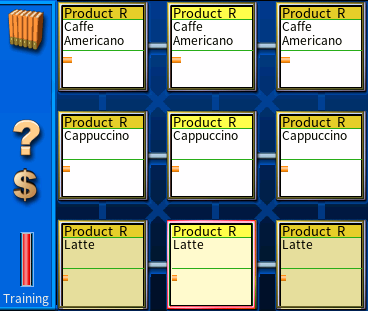
If your game settings allow it, add two more floors and sell a different coffee type on each.
Buy your paper, do not make it
Paper needs a very expensive logging camp and paper factory. Buy it from another company or a seaport until you can afford that supply chain — it is a small burden, because paper is cheap and coffee shops use very little of it.
If nobody is producing paper at all, the only coffee you can sell is lattes, and the shop is markedly less profitable. In that situation, consider starting with cakes or pizza instead — neither needs paper.
Advertise
Run a campaign to build the brand. Only one shop needs to advertise — the brand applies to every coffee shop you own.
Cut prices at first, raise them later
Low prices attract the first customers. Once quality and brand have improved, put them back up.
Add shops across the city
The Duplicate Firm button makes this quick. Do not place shops too close together — unless the existing ones cannot keep up with demand — and do not place them in low-traffic areas. Both waste money.
Reinvest, and watch your crop inventory
The shops should now return well. Put the money into more stores, and into more productive farms if demand outruns supply.
Coffee and sugar are seasonal crops. Inventory can be depleted unexpectedly between harvests if you are not watching supply levels.
Consider R&D — but not yet
An R&D center for higher-quality coffee is optional, and the numbers explain why it can wait:
| Contribution | Share |
|---|---|
| Quality, within a coffee’s overall rating | 35% |
| Raw materials, within that quality | 55% — 50% for caffe americano |
So R&D is not important early. It becomes an edge once competitors arrive.
Expand into pizza next
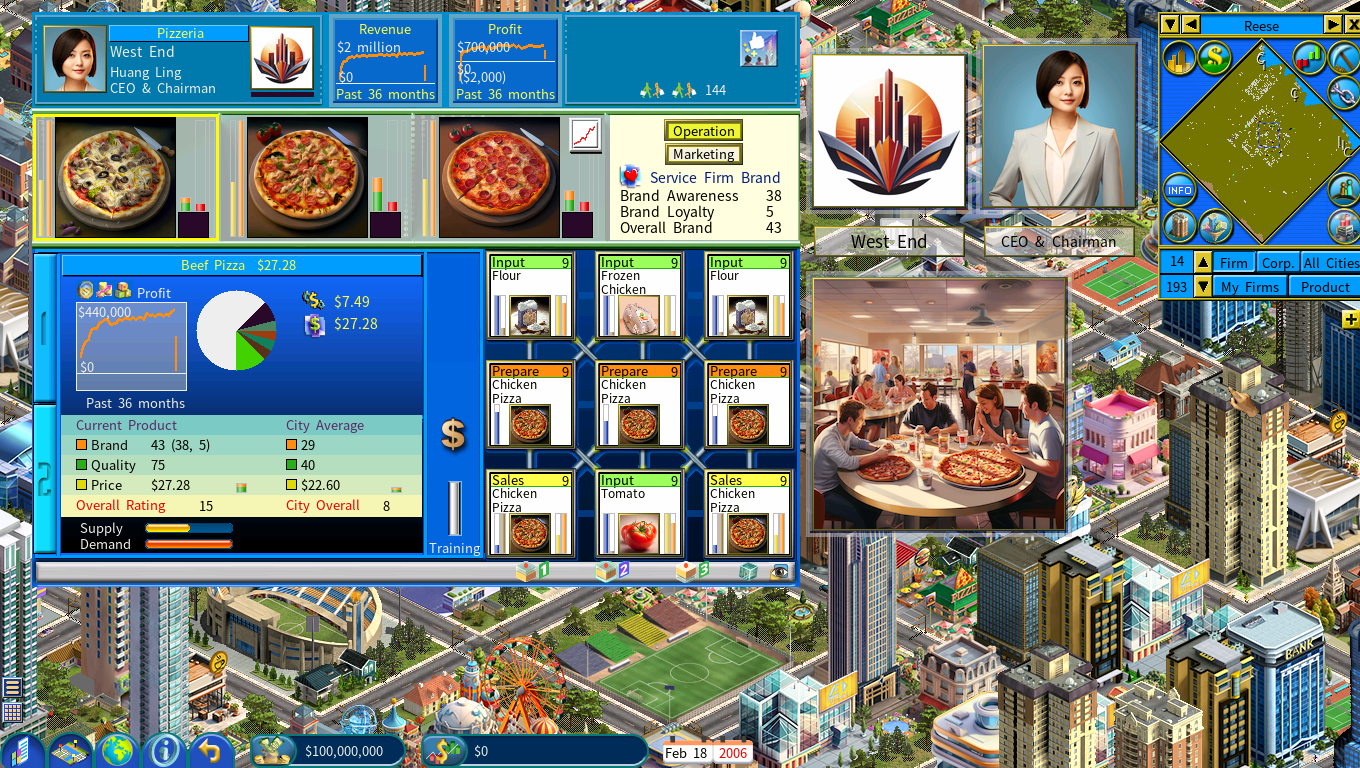
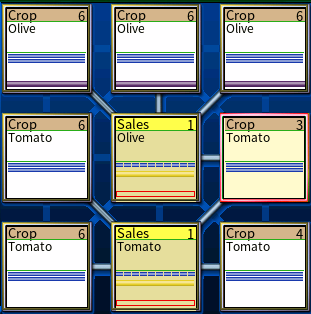
Pizza sells well and needs relatively few ingredients: flour, frozen beef and chicken, olives, tomatoes and parma ham.
Set up the pizza supply chain
- A medium farm producing frozen beef, chicken and pork together.
- Another medium farm for tomatoes and olives — more crop units on tomatoes, which are in greater overall demand.
- A small or medium factory turning frozen pork into parma ham.
- A medium farm dedicated to wheat alone.
- A large flour factory.
- Optionally, R&D for the pizza types, the flour and the parma ham — though as with coffee, research is only 50% of quality and quality only 35% of the overall rating.
Place pizzerias beside your coffee shops
High-traffic locations, and preferably adjacent to the coffee shops — service and retail firms close together boost each other’s traffic. Advertise, and cut prices initially to get product moving.
Then cakes and fast food
Same techniques. Note that every cake type and fried chicken need a great deal of flour compared with everything else, which is exactly why the large flour factory and a big supply of high-quality wheat matter.
Turn the surplus into a food business
You should now be making tens of millions a year. Sell the burger buns, burger patties, eggs, frozen beef, pork and chicken and parma ham your service firms use directly in supermarkets as well.
Best done in parallel with the service expansion, adding products as you go — not as a separate phase afterwards.
Create new products from small additions
A few extra raw materials open up whole new supermarket lines. The lemons for lemon tarts make citric acid, and citric acid makes yogurt. Adding glass to your existing milk gives bottled milk. Olives become canned olives. The Manufacturer’s Guide has the full list.
Consolidate the position
With food, beverages and snacks conquered you are well placed to expand anywhere. Ways to strengthen the service firms themselves:
- Vertically integrate the whole supply chain — produce your own paper, glass, aluminum and the rest.
- Control media and internet firms so your advertising is effectively free.
- Cluster your retail and service firms so each boosts the others’ traffic.
- Fund R&D fully to stay ahead of the competition.
- Buy out competitors and build towards a monopoly on food and services.
Strategy 2: starting in food, then moving into services
Build another industry first and enter services with its profits and supply chains behind you.
| For | Against |
|---|---|
| An existing supply chain, access to high-quality ingredients, and a capital base large enough to absorb losses while you catch up — all advantages your competitors may lack. | You are entering against established competitors who will likely hold an R&D edge and quality advantages in ingredients such as coffee beans, tomatoes or potatoes. |
Start with livestock products
Frozen pork, beef, lamb and chicken, plus eggs. Add two factories for parma ham and burger patties. Sell it all in supermarkets and push quality up with farm training.
Consider adding an export company so you can sell farm products outside the city too — see the export strategy guide.
Move into more sophisticated food
Flour for burger buns, olives for canned olives, then milk, sugar and cocoa. With aluminum or glass available from another company or a seaport you can add bottled milk or canned soup.
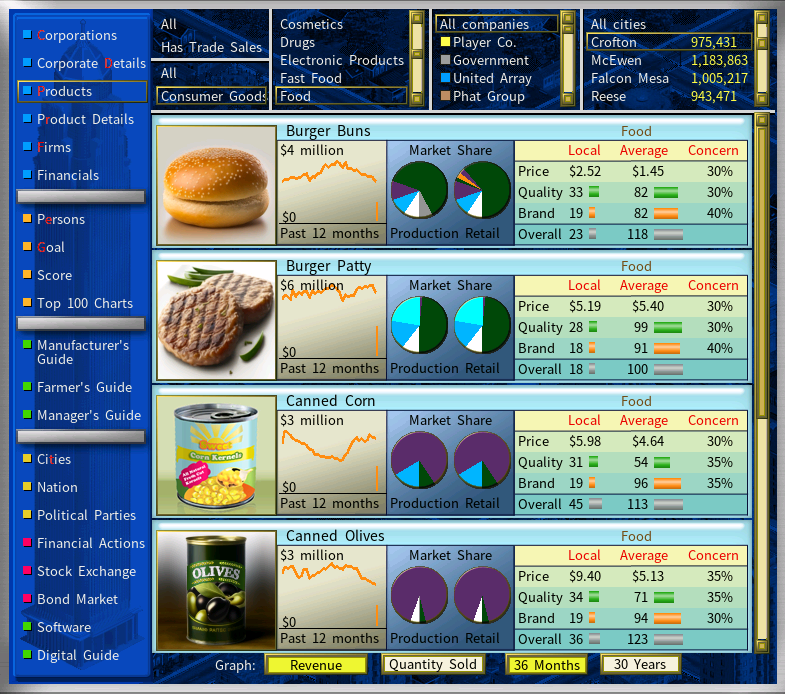
The economy to aim for: as many different supermarket products as possible from as few different inputs as possible.
Move into services as soon as the chain nearly covers one
You do not need every food type first — only enough of the supply chain. Producing frozen chicken, flour, burger buns and burger patties already means fried chicken, so fast food joints are the logical next step. Add tomatoes and hamburgers follow. French fries can wait if potatoes are outside the budget.
Then pizza
Once the tomatoes are growing, pizza is available. At this point you produce nearly half of all service industry products and most food items — but no snacks or beverages:
| Category | What you make |
|---|---|
| Food | All livestock products, burger patties and buns, canned olives |
| Fast food | Fried chicken, hamburgers |
| Pizza | All three types — chicken, beef and parma |
For a leaner operation, skip eggs until you are ready for cakes, and skip frozen lamb entirely — nothing else is made from it. Add both back once you can afford to complete the supply chain.
Expand food and services in parallel
Each new food item tends to unlock a service one. A cereal bar means you already have the flour and eggs for strawberry cakes. A bottled milk business is the moment to move into coffee.
Expect a fight in cakes and coffee
By the time you reach them the competition will be established — and in coffee you will also be behind on coffee bean quality. Spend aggressively on advertising and offer cut-rate prices until quality catches up.
Consolidate
With services and the food, beverage and snack industries conquered, the same consolidation advice as in strategy 1 applies.
Using subsidiaries
With the Subsidiary DLC you control companies that expand into other industries on your behalf. When choosing what a subsidiary may expand into, restrict it to the industries that reinforce this strategy:
- Beverages
- Cakes
- Coffee
- Food
- Fast food
- Pizza
- Snacks