

Insurance Headquarters

Setting one up
Open the Build menu, select [Bank and Finance DLC], choose the Insurance Headquarters building, and place it on the city map.
The capital splits in two. Half pays for the headquarters itself; the other half is injected into the new insurance company as its operating capital.
What makes an insurance company competitive
Four things, and the pages below are where you manage each:
- Price
- Quality of service
- Brand
- Locations of its front offices — the customer traffic index
Overview
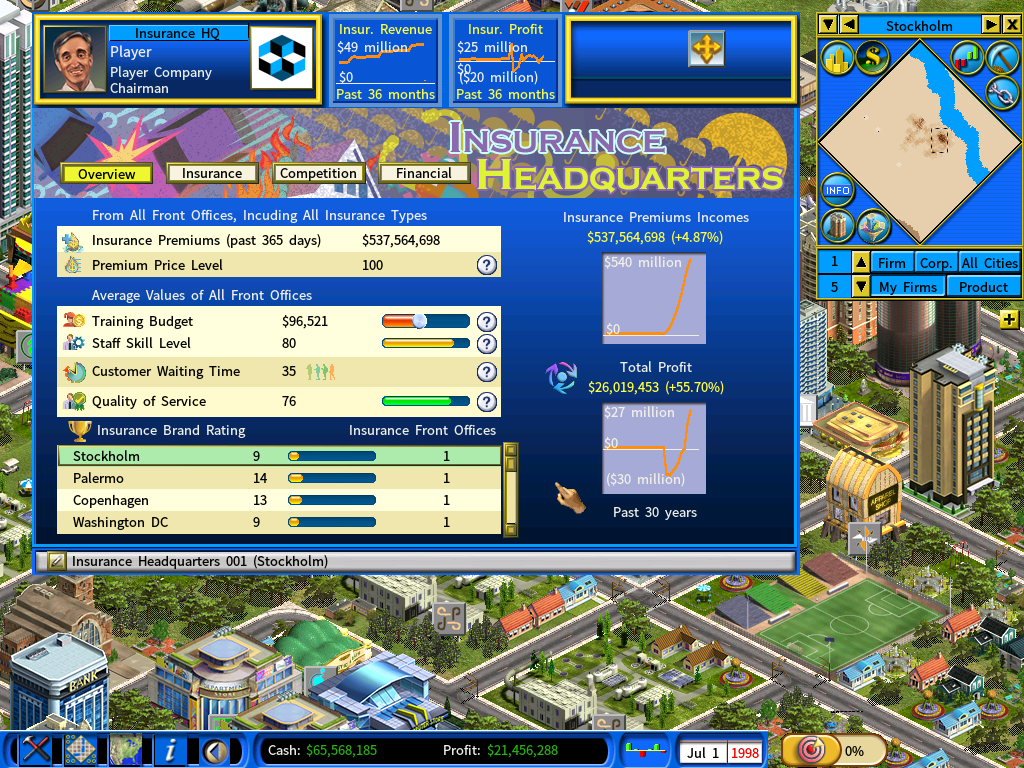
The first figure is the total insurance premiums received over the past 365 days, across all three types — life, home and car. Premiums are the regular periodic payments policyholders make to the company.
| Factor | What drives it, and where you change it |
|---|---|
| Premium price level | The average across life, home and car insurance. Set each type’s price level on the [Insurances] page. |
| Quality of service | The staff skill level and the customer waiting time together. |
| Staff skill level | Rises over time with a decent training budget, set on this screen. With the City Economic Simulation DLC enabled, the citizens’ education level affects it too. |
| Customer waiting time | Above 30 it starts to drag quality of service down. Open more insurance front offices to share the workload. |
| Brand rating | Shown per city at the bottom of the screen. Raise it city by city, through the [Marketing] page of each front office. |
Life insurance
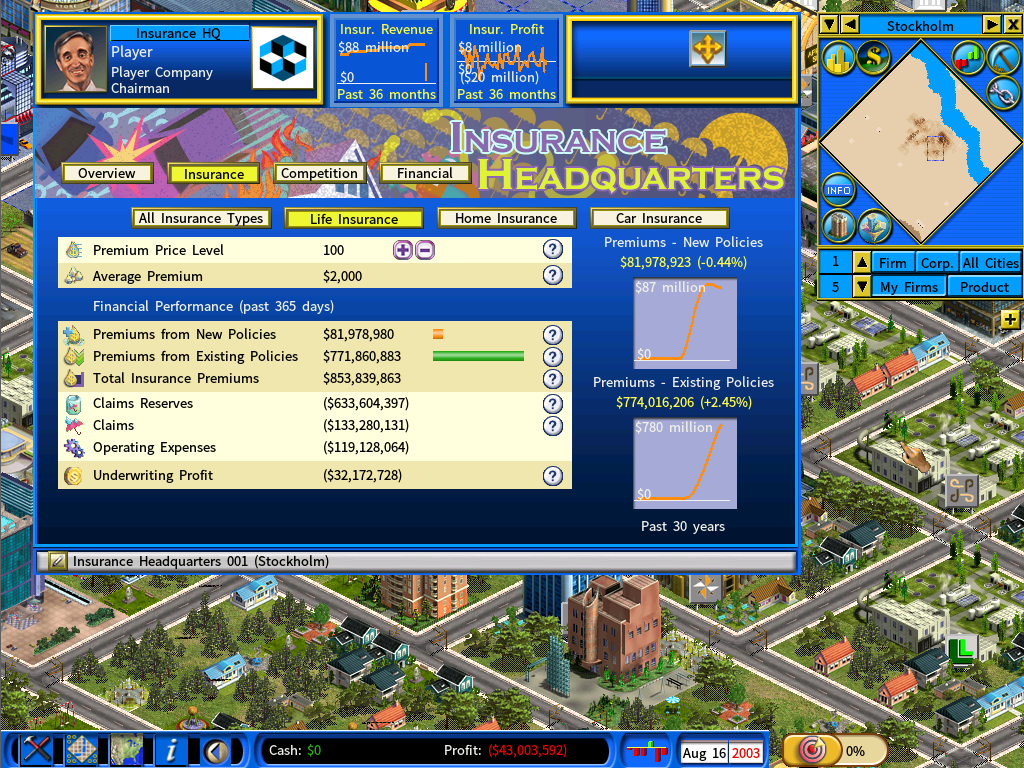
The screen separates premiums from new policies from premiums from existing policies.
Premiums from new policies are what this financial year’s new contracts brought in. A life policy is assumed to last an average of 30 years, and pays the company premium income annually until it matures.
New policies are the health indicator to watch. A company that writes good numbers of them year after year keeps enlarging its book of existing policies — and with it a reliable, growing income stream stretching decades ahead.
Home insurance
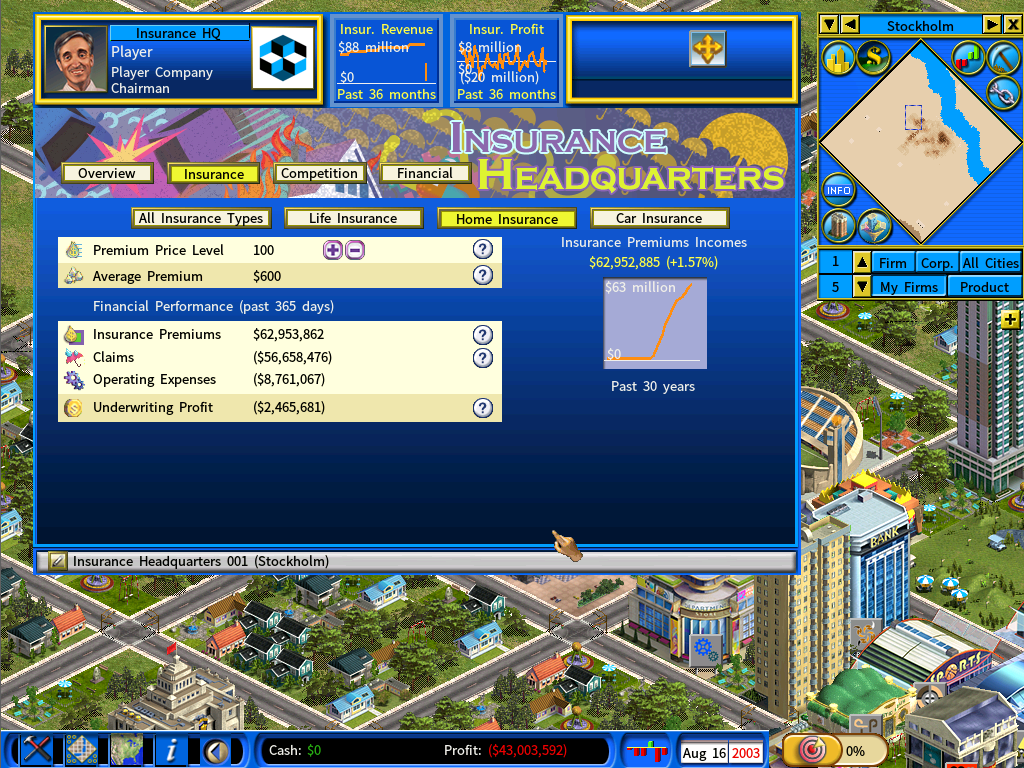
Market size follows the city’s population, on two assumptions: 80% of households buy home insurance, and a household averages 3 people.
home insurance market size
  = population / <people per household> × <% of households that insure>
Car insurance
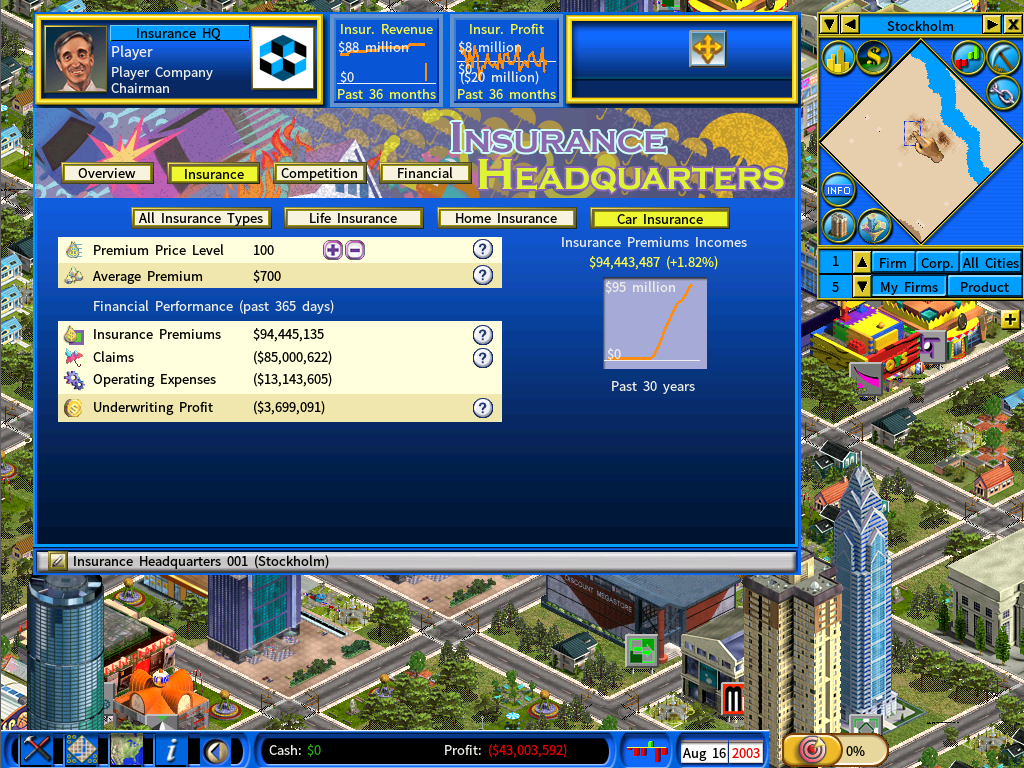
Market size follows the city’s car ownership rate, which is directly proportional to its real wage rate — higher incomes mean more people can afford a car. The game assumes 40 cars per 100 people at a real wage rate of 100, and scales from there.
car insurance market size
  = population × 40 / 100 × <real wage rate> / 100
Competition
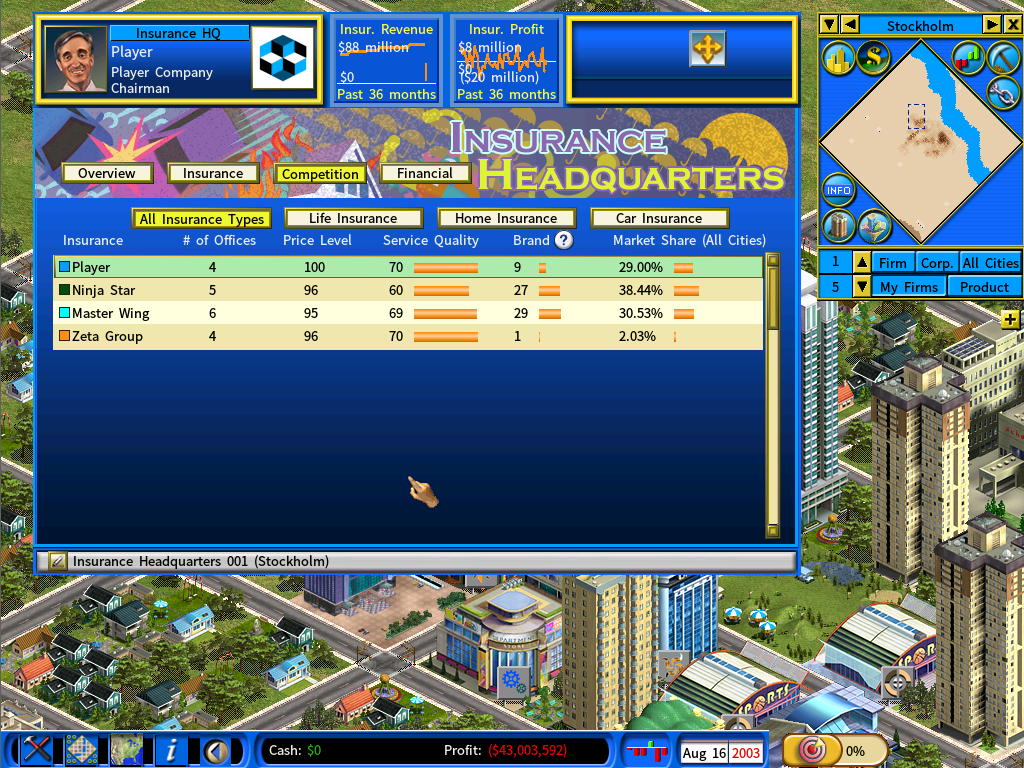
This page shows the first three of the four competitiveness factors for every competing insurance company, which is enough to read the state of the market at a glance.
Make Investments Using Other People's Money Return to Banking and Finance DLC Main Page